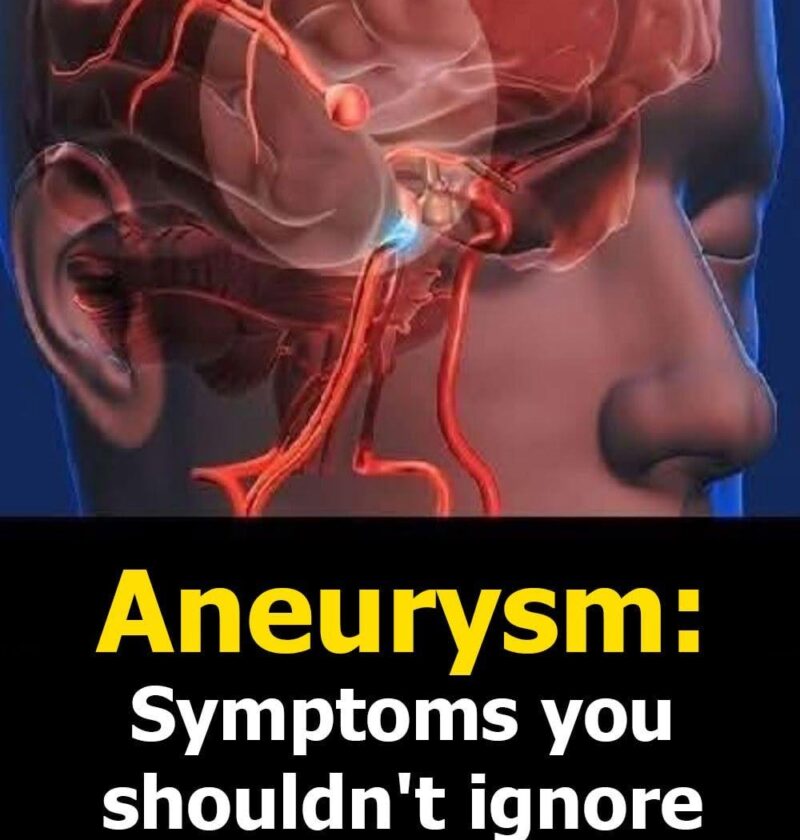
An aneurysm (a dangerous bulging or weakening in a blood vessel wall) can be silent for a long time—but when it becomes risky or starts leaking/rupturing, symptoms can appear suddenly and should never be ignored.
Here are key warning signs depending on the type:
Brain aneurysm (cerebral aneurysm)
Often the most urgent type.
Possible warning signs before rupture:
- Sudden, severe headaches that feel “different” from usual
- Pain above or behind one eye
- Blurred or double vision
- Drooping eyelid
- Numbness or weakness on one side of the face
- Trouble speaking
If rupture happens (medical emergency):
- “Worst headache of my life” (thunderclap headache)
- Nausea and vomiting
- Stiff neck
- Loss of consciousness or fainting
- Seizures
- Confusion or extreme drowsiness
Aortic aneurysm (in chest or abdomen)
This affects the body’s main artery.
Warning signs:
- Deep, constant chest or back pain (can feel tearing or stabbing)
- Sudden abdominal pain or pulsating feeling in the belly
- Shortness of breath (if chest aorta involved)
- Hoarseness or difficulty swallowing (less common but serious)
- Rapid drop in blood pressure, dizziness, or collapse (if rupture occurs)
Peripheral aneurysms (arms/legs or other arteries)
Less common but still important.
Possible signs:
- A noticeable pulsating lump under the skin
- Pain or tenderness in the area
- Numbness or reduced blood flow to a limb
When to treat it as an emergency
Seek immediate medical help if there is:
- Sudden severe headache unlike any before
- Collapse, fainting, or confusion
- Sudden severe chest, back, or abdominal pain
- Sudden vision or speech problems
Why it matters
Aneurysms often show no symptoms until they become dangerous, which is why conditions like a brain aneurysm are considered high-risk under the disease category Aneurysm.
If you want, I can also explain:
- what causes aneurysms,
- who is at risk,
- or how they are detected before they rupture.