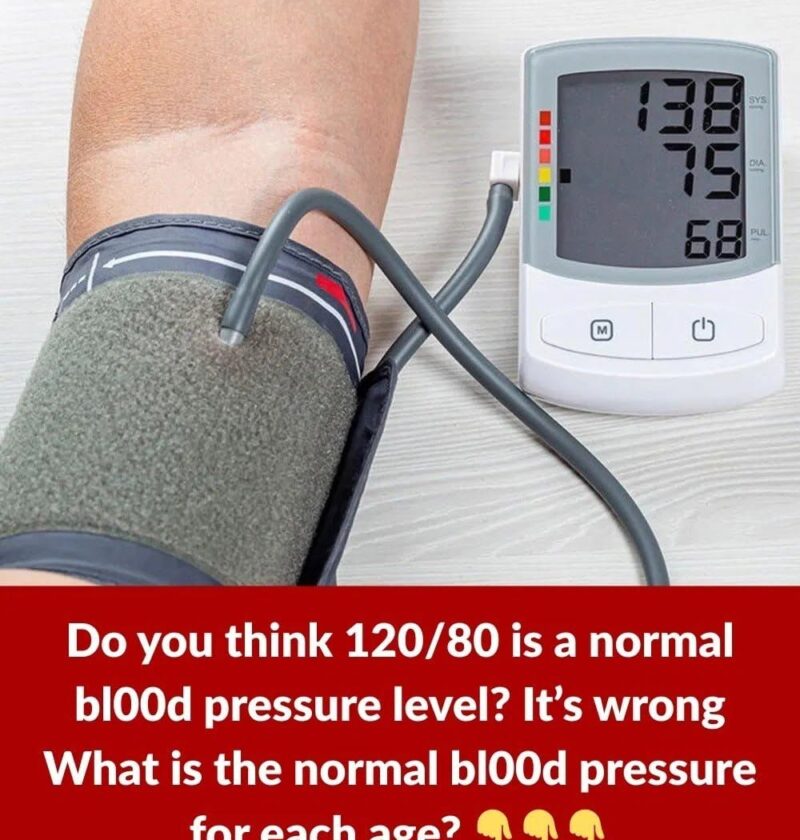
A lot of people get confused about this, but the key point is: normal blood pressure does not change dramatically with age in adults—it stays in a similar healthy range, although doctors may individualize targets based on health conditions.
The term Blood pressure refers to the force of blood pushing against artery walls, measured as:
- Systolic (top number): pressure when the heart beats
- Diastolic (bottom number): pressure when the heart rests
Normal blood pressure (by age groups)
Children (1–12 years)
- Not a fixed number like adults
- Interpreted using percentiles based on age, height, and sex
- Rough general range:
- About 90–110 / 60–75 mmHg
Teenagers (13–17 years)
- Similar to adults
- Normal range:
- ~110–120 / 70–80 mmHg
Adults (18–59 years)
- Standard healthy range:
- Normal: less than 120/80 mmHg
- Elevated: 120–129 / <80
- High blood pressure (Stage 1): 130–139 or 80–89
- Stage 2: ≥140 or ≥90
- Crisis: >180 and/or >120 (emergency)
Older adults (60+ years)
- Healthy target is still generally:
- Around 120–130 / 70–80 mmHg
- However, doctors may allow slightly higher readings in some people (for example 130–139 systolic) if lowering it too much causes dizziness or falls.
Important facts people often misunderstand
- There is no “normal BP that rises naturally with age” as a rule.
- High blood pressure is not a normal part of aging—it is a risk factor, not a normal condition.
- Many older adults are still advised to keep BP below 130/80 if they can tolerate it safely.
When blood pressure is concerning
You should seek medical advice if:
- Readings are consistently above 130/80
- You get dizziness, chest pain, headaches, or shortness of breath
- BP is suddenly very high (≥180/120)
Simple takeaway
- Ideal: ~120/80 mmHg
- Acceptable varies slightly with age and health
- Consistently high readings need attention, not “normal aging”
If you want, I can also show:
- A simple chart for home BP monitoring
- Or explain why BP rises with age in some people (artery stiffness, salt sensitivity, etc.)