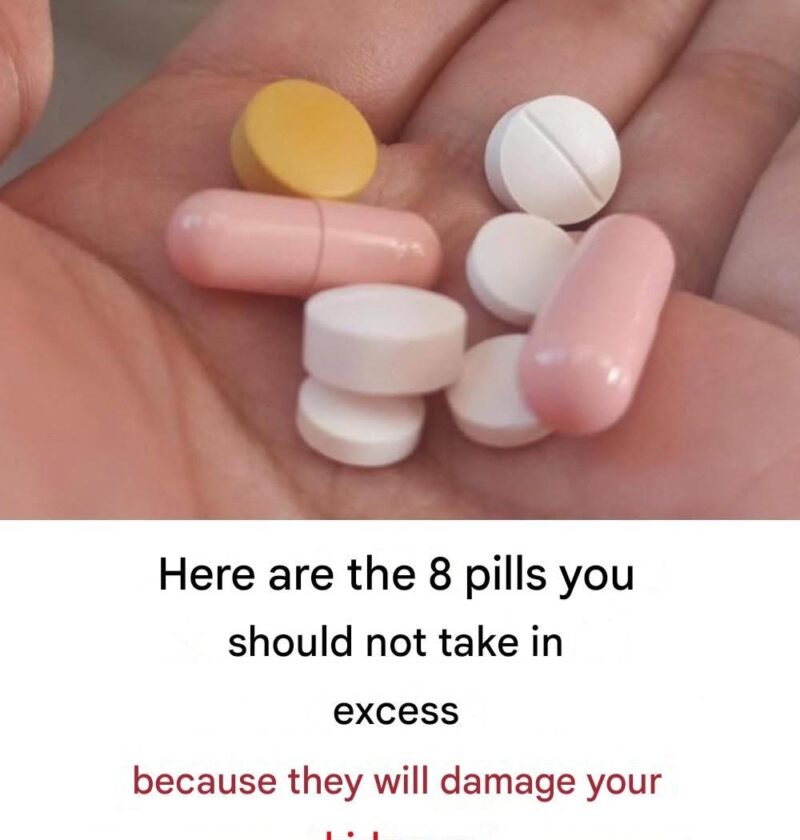
Headlines like “eight pills you shouldn’t take because they damage your kidneys” are overgeneralized. No medication is universally “forbidden,” but some drugs can increase kidney risk, especially with high doses, long-term use, dehydration, or existing Chronic Kidney Disease.
Here are commonly discussed medication groups that require caution:
💊 1. NSAID painkillers
Examples:
- Ibuprofen
- Diclofenac
- Naproxen
Risk: Can reduce blood flow to kidneys, especially with long-term use or dehydration.
💊 2. Certain antibiotics
- Aminoglycosides (e.g., gentamicin)
- Some antivirals in high doses
Risk: Can be directly toxic to kidney tissue in some cases.
💊 3. Diuretics (“water pills”)
- Furosemide and others
Risk: Can cause dehydration or electrolyte imbalance if not monitored.
💊 4. Proton pump inhibitors (PPIs)
- Omeprazole and similar drugs
Risk: Long-term use has been linked to kidney inflammation in rare cases.
💊 5. Contrast dye (used in scans)
- Iodinated contrast agents (used in CT scans)
Risk: Can temporarily stress kidneys, especially in high-risk patients.
💊 6. Lithium
- Used for certain psychiatric conditions
Risk: Can affect kidney function over long-term use.
💊 7. Some blood pressure medications (ACE inhibitors / ARBs)
- Lisinopril, losartan
Risk: Usually kidney-protective long-term, but may temporarily change kidney readings.
💊 8. High-dose or misuse of supplements
- High-dose vitamin C
- Certain herbal supplements
Risk: Some can form kidney stones or toxic metabolites.
🧠 Important reality check
These medications are not automatically dangerous. In many cases:
- They are life-saving or essential
- Kidney risk is dose- and condition-dependent
- Doctors monitor kidney function with blood tests
🚨 When risk is higher
Kidney damage risk increases if you have:
- Dehydration
- Older age
- Diabetes or high blood pressure
- Existing kidney disease
✔️ Bottom line
There is no “do not take list” that applies to everyone. The real issue is safe use, correct dosing, and medical monitoring, not blanket avoidance.
If you want, I can give you a kidney-safe pain relief guide or a list of medications that are usually safer alternatives depending on your condition.