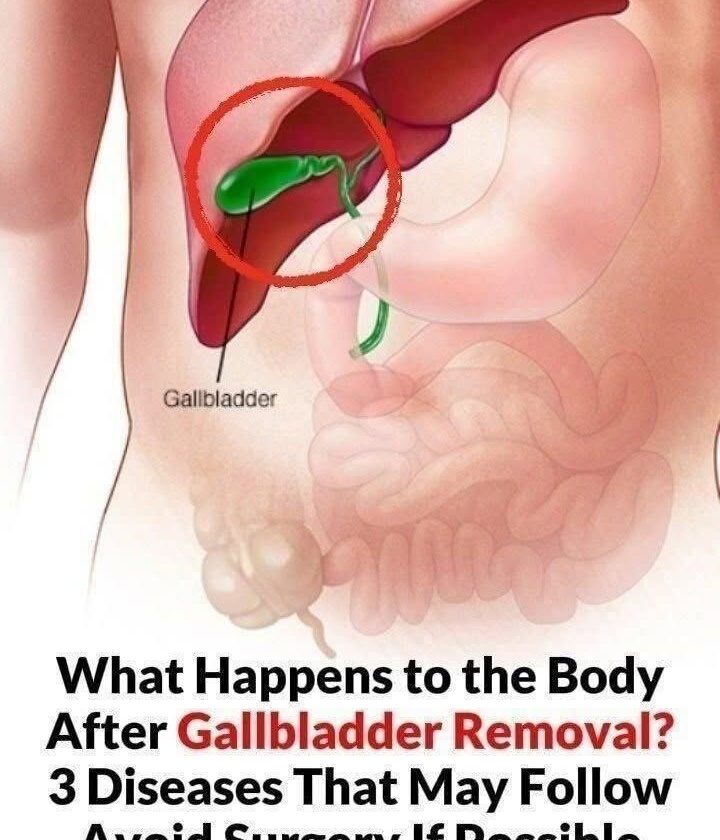
That headline is misleading. Gallbladder removal (cholecystectomy) is a very common and generally safe surgery, and it’s not something doctors recommend avoiding when it’s medically needed.
First, what the gallbladder does
Your gallbladder stores bile, which helps digest fat. If it becomes inflamed or filled with stones, it can cause serious pain and complications.
After gallbladder removal: possible effects (not guaranteed “conditions”)
Most people do fine long-term, but a minority may experience:
1. Digestive changes (most common)
Some people get:
- Loose stools
- Urgency after fatty meals
- Bloating or gas
This happens because bile now flows continuously into the intestine instead of being stored.
2. Post-cholecystectomy syndrome
A small group may have:
- Ongoing abdominal discomfort
- Indigestion-like symptoms
Often related to bile flow changes or unrelated digestive issues.
3. Bile reflux or irritation (less common)
- Bile can sometimes irritate the stomach or esophagus
- May cause burning discomfort similar to reflux
What’s important to understand
Gallbladder removal is usually done for:
- painful gallstones
- infection/inflammation (cholecystitis)
- blockage of bile ducts
If untreated, these conditions can lead to:
- severe infection
- pancreatitis
- emergency surgery situations
So in medical reality, the choice is often:
controlled surgery vs. serious complications
Why the “avoid surgery” claim is misleading
The idea that you should “avoid gallbladder surgery when possible” ignores that:
- many patients need it
- it prevents dangerous complications
- most people live normally after recovery
Bottom line
Gallbladder removal is not something to fear or avoid by default. A small number of people may have digestive side effects, but for many patients it is a life-improving or life-saving procedure.
If you want, I can explain:
- what gallstones feel like
- or how to manage symptoms without surgery (when medically safe)