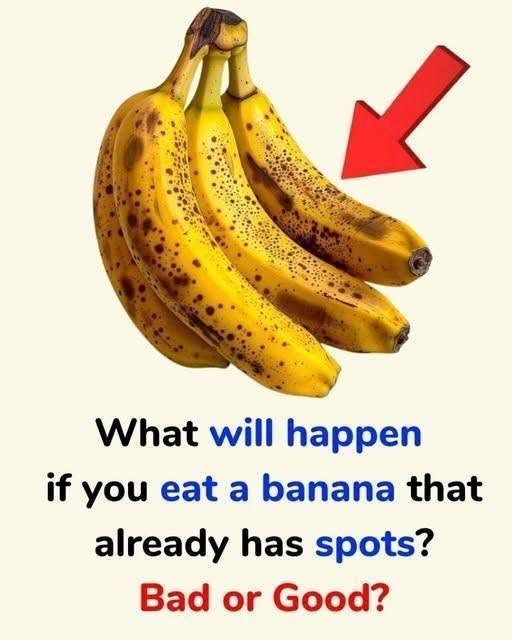
If you eat a banana with brown spots, nothing bad will usually happen.
Those spots are typically just a sign that the banana is fully ripe or overripe, not spoiled.
What the spots mean
Brown or dark spots on a banana are caused by:
- Natural ripening enzymes breaking down starch into sugar
- The fruit becoming softer and sweeter
- Sometimes slight oxidation of the peel and flesh
This is normal aging of the fruit, not contamination.
Is it safe to eat?
Yes—spotted bananas are safe to eat as long as:
- There is no mold (fuzzy growth, especially white/green/black patches)
- There is no sour, alcoholic, or rotten smell
- The inside is not leaking or unusually dark/slimy
In fact, spotted bananas are often:
- Sweeter
- Easier to digest
- Better for baking
When you should NOT eat it
Avoid the banana if you notice:
- Mold on the peel or inside
- Strong fermented or rotten smell
- Liquid leaking from the fruit
- Extremely dark, mushy, or stringy flesh that tastes off
Bonus: Why overripe bananas are popular
Overripe bananas are commonly used in:
- Banana bread
- Smoothies
- Pancakes
- Desserts
Because the natural sugars are more concentrated, they taste sweeter.
Bottom line
Brown spots = ripe and sweet, not dangerous.
If you want, I can also explain:
- Why bananas turn black faster in hot climates (like Pakistan)
- Or how to store bananas so they last longer without spoiling