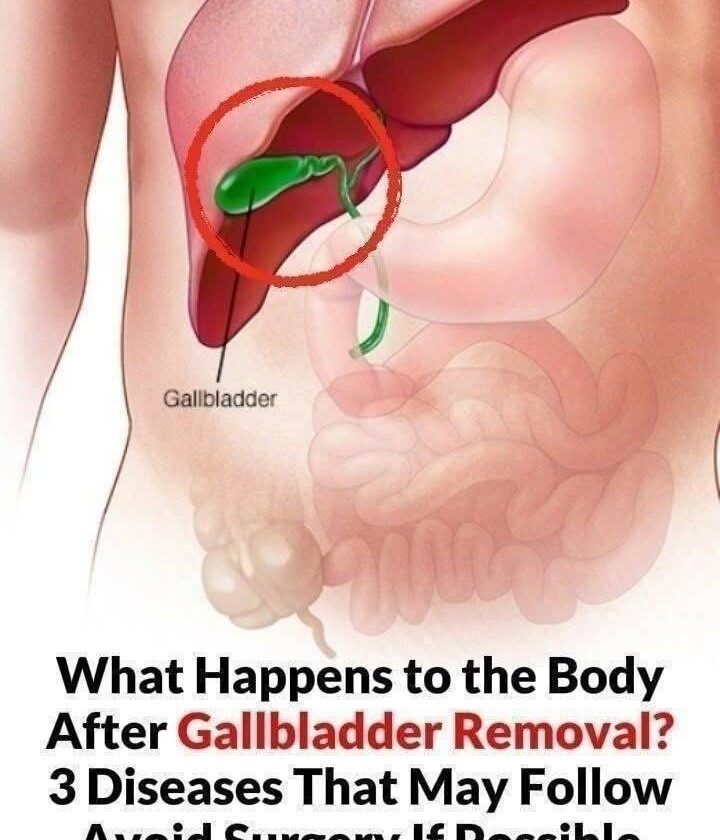
That title is typical clickbait, and it mixes a few real medical possibilities with a misleading conclusion.
First: gallbladder removal is not something doctors recommend “just because”
A cholecystectomy (gallbladder removal) is usually done when there are clear problems like:
- repeated painful gallstones
- gallbladder inflammation (cholecystitis)
- blockage of bile ducts
- pancreatitis caused by gallstones
In these cases, not doing surgery can actually be more dangerous than doing it.
What conditions can happen after removal (but don’t affect everyone)
1. Postcholecystectomy syndrome
Postcholecystectomy syndrome
This is a broad term for symptoms like abdominal pain, bloating, or indigestion after surgery. It doesn’t mean the surgery “failed”—it can happen due to bile flow changes or unrelated digestive issues. Many cases are mild or temporary.
2. Bile acid diarrhea
Bile acid diarrhea
Without a gallbladder, bile flows continuously into the intestines. In some people, this can irritate the colon and cause chronic diarrhea. It’s treatable with medication and dietary adjustments.
3. Sphincter of Oddi dysfunction
Sphincter of Oddi dysfunction
A small percentage of patients develop pain due to abnormal function of the bile duct valve. This is uncommon and often manageable.
Important reality check
The claim “you should avoid surgery when possible” is misleading.
For people with symptomatic gallstones or complications:
- The risk of recurrent pain, infection, or pancreatitis is often higher than surgical risk.
- Laparoscopic gallbladder removal is one of the most common and safest surgeries worldwide.
Most people:
- recover well
- eat normally after adjustment
- do not develop serious long-term problems
Bottom line
Yes, there are some possible post-surgery digestive issues—but they are not common enough to outweigh surgery when it’s medically needed. The decision is always about balancing risks, not avoiding surgery by default.
If you want, I can break down who actually needs gallbladder removal vs who can safely wait—that’s where the real nuance is.