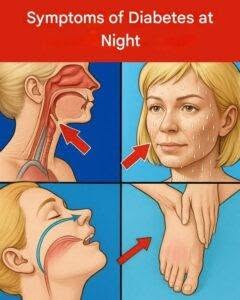
Diabetes symptoms can sometimes be more noticeable at night because changes in blood sugar may affect sleep, thirst, urination, and nerves. These signs are not specific to diabetes alone, but if they occur regularly, it may be worth checking blood glucose levels with a healthcare professional.
9 possible nighttime signs associated with diabetes
- Waking up often to urinate (nocturia)
- High blood sugar can cause the kidneys to remove extra glucose through urine, increasing urination.
- Excessive thirst at night
- Frequent urination can lead to dehydration and increased thirst.
- Night sweats
- Sweating during sleep can occur with blood sugar fluctuations, including low blood sugar in people taking diabetes medications.
- Feeling very hungry at night
- Blood sugar problems can affect how the body uses energy.
- Tingling, burning, or numbness in feet
- Nerve damage related to diabetes (diabetic neuropathy) can cause symptoms that are often more noticeable at rest or nighttime.
- Trouble sleeping
- Blood sugar changes, thirst, frequent urination, or discomfort from nerve symptoms can interfere with sleep.
- Dry mouth
- Dehydration from increased urination may cause a dry mouth.
- Slow-healing cuts or wounds
- Diabetes can affect circulation and immune function, which may slow healing.
- Blurred vision or morning headaches
- Changes in blood glucose can affect fluid balance in the eyes and contribute to vision changes.
When to consider testing
It may be useful to ask about diabetes screening if you have:
- Several of these symptoms together
- Increased thirst and urination
- Unexplained weight loss
- A family history of diabetes
- High blood pressure or excess body weight
Common tests include fasting blood glucose and HbA1c, which estimates average blood sugar over the past few months.
If you tell me your age, symptoms, and whether they happen every night or occasionally, I can help you understand what might fit and what steps to take next.