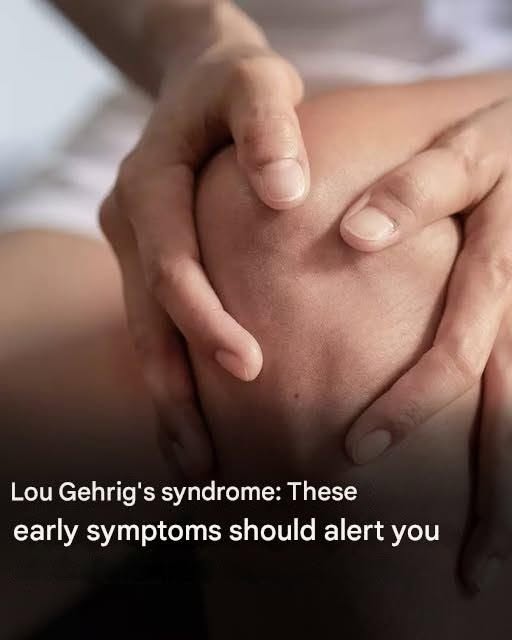
Amyotrophic Lateral Sclerosis, often called Lou Gehrig’s syndrome, is a condition that gradually affects the nerve cells responsible for controlling voluntary muscles. Over time, these nerves weaken and die, leading to muscle loss and difficulty moving, speaking, and breathing.
⚠️ Early symptoms (first signs people often notice)
Early symptoms are usually subtle and vary from person to person. Common ones include:
1) Muscle weakness
- Weakness in the hands, arms, or legs
- Trouble gripping objects or lifting things
- Feeling like limbs are “heavier” than usual
2) Muscle twitching (fasciculations)
- Small, involuntary muscle twitches
- Often seen in arms, shoulders, or tongue
- Can happen even when resting
3) Clumsiness or difficulty with coordination
- Frequent tripping or stumbling
- Dropping items more often
- Difficulty buttoning clothes or writing
4) Speech changes
- Slurred or slow speech
- Difficulty projecting voice
- Words may sound unclear to others
🧠 Less common early signs
- Cramping in muscles (especially hands or calves)
- Mild stiffness or tightness
- Fatigue that doesn’t match activity level
📉 Important medical context
- Early symptoms can be very mild and mistaken for other conditions
- Not all twitching or weakness means ALS—many other, more common conditions can cause similar symptoms
- Diagnosis requires neurological examination and tests
🚨 When to seek medical attention
You should see a doctor if you notice:
- Progressive (worsening) weakness over weeks or months
- Repeated falls or loss of hand function
- Persistent speech or swallowing changes
🧠 Key takeaway
ALS is rare, but its early signs usually involve gradual, progressive muscle weakness and coordination problems, not sudden symptoms.
If you want, I can also explain how ALS is diagnosed, or how it differs from conditions like multiple sclerosis or nerve compression, which are often confused with it.