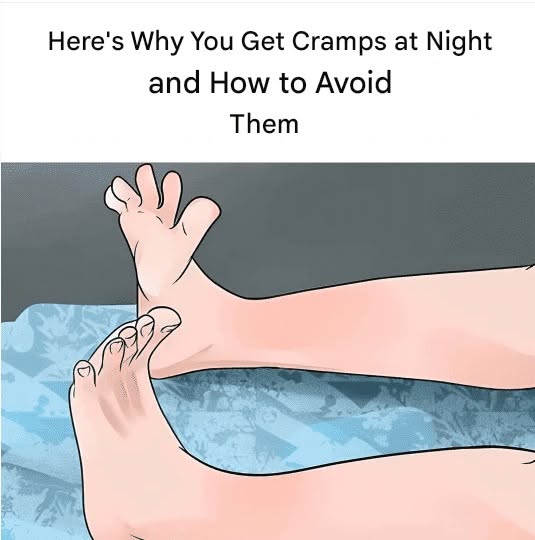
Why We Get Cramps at NightNighttime leg cramps are sudden, painful muscle contractions that often affect the calf, foot, or thigh while resting or sleeping. They are common, especially as people get older, but the exact cause is not always clear.
Common reasons nighttime cramps may happen
- Muscle fatigue or overuse
- Extra walking, exercise, standing for long periods, or unfamiliar activity can strain muscles.
- Changes in muscles and nerves with aging
- Muscles may become less flexible, and nerve signals controlling muscles can change over time.
- Dehydration
- Not drinking enough fluids can contribute to muscle discomfort, especially after sweating or illness.
- Low levels of certain nutrients
- Low levels of minerals such as magnesium, potassium, or calcium can sometimes contribute, though supplements are not always helpful unless a deficiency is present.
- Long periods of sitting or inactivity
- Reduced movement can affect circulation and muscle function.
- Certain medications or health conditions
- Some medicines and conditions affecting nerves, circulation, or metabolism may increase the likelihood of cramps.
What may help prevent nighttime cramps
- Stretch calf and leg muscles gently before bed.
- Stay active with regular walking and strength exercises.
- Drink enough fluids during the day.
- Avoid sudden increases in intense exercise.
- Keep legs warm if cold temperatures trigger cramps.
What to do when a cramp happens
- Gently stretch the affected muscle.
- Massage the area.
- Slowly move the foot and ankle.
- Apply warmth if it feels helpful.
When to ask a healthcare professional
Get advice if cramps are:
- Frequent, severe, or worsening
- Associated with swelling, redness, or weakness
- Causing major sleep disruption
- Accompanied by numbness or changes in walking
Occasional nighttime cramps are common, but frequent cramps may be worth discussing to look for possible triggers.