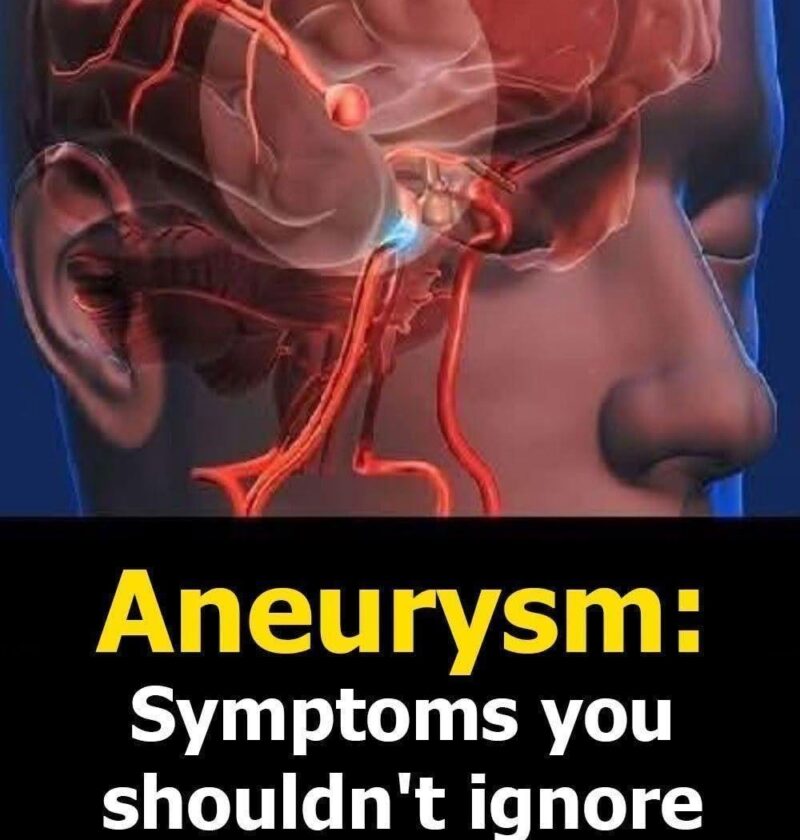
An aneurysm is a weakened area in the wall of a blood vessel that can enlarge and, in some cases, rupture. The warning signs depend on where the aneurysm is located. Many aneurysms cause no symptoms until they become large or rupture, which is why some are found during imaging done for other reasons.
Possible warning signs that should not be ignored
Brain aneurysm (cerebral aneurysm):
- A sudden, severe “worst headache of your life” (especially if it peaks within seconds or minutes)
- Neck stiffness
- Nausea or vomiting with a sudden severe headache
- Sensitivity to light
- Confusion, fainting, seizures
- Weakness, numbness, trouble speaking, or vision changes
Aortic aneurysm (large artery in the chest or abdomen):
- Deep, persistent pain in the chest, back, or abdomen
- A feeling of a pulsating mass in the abdomen (sometimes)
- Sudden severe chest, back, or abdominal pain can signal a rupture
Seek emergency help immediately for:
- Sudden severe headache unlike any previous headache
- Sudden chest, back, or abdominal pain that is intense or unusual
- Fainting, severe weakness, trouble speaking, or signs of stroke
Risk factors include:
- High blood pressure
- Smoking
- Older age
- Family history of aneurysms
- Certain inherited connective tissue conditions
- Atherosclerosis (hardening of arteries)
Aneurysms are not always preventable, but controlling blood pressure, avoiding smoking, and getting recommended medical checkups can reduce risk.
If you are referring to a specific type of aneurysm (brain, aorta, or another location), I can give more targeted signs and risk factors.