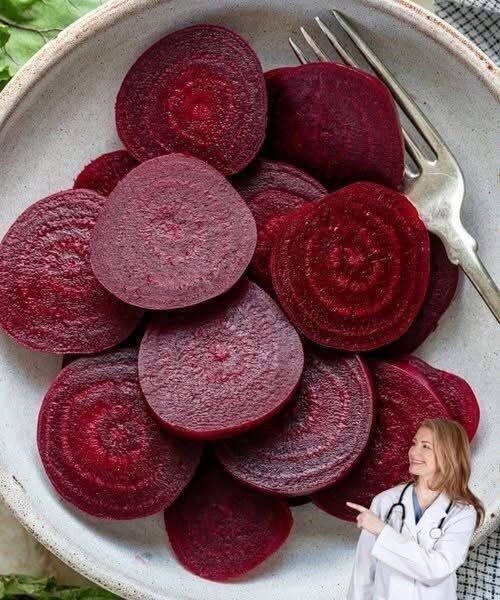
Headlines like “Doctors reveal that eating beets causes…” are usually clickbait. The health effects of beets depend on the person, the amount eaten, and their overall diet.
Here’s what research shows:
Potential Benefits of Beets
- May help lower blood pressure: Beets are rich in naturally occurring nitrates, which the body can convert into nitric oxide. This helps relax blood vessels and may modestly lower blood pressure.
- May support exercise performance: Dietary nitrates can improve blood flow and may help some people exercise more efficiently.
- Rich in nutrients: Beets provide fiber, folate, potassium, manganese, and antioxidants.
- May support heart health: Their fiber and plant compounds contribute to an overall heart-healthy diet.
Things That Can Happen After Eating Beets
- Pink or red urine or stools: This harmless effect, called Beeturia, can occur in some people.
- Digestive changes: Eating a large amount of beets may cause mild bloating or changes in bowel habits in some individuals.
- Kidney stone considerations: Beets are relatively high in oxalates. People who have had certain types of kidney stones may be advised to limit high-oxalate foods as part of an individualized diet.
Who Should Be Cautious?
- People taking medications for high blood pressure should be aware that large amounts of beet juice may further lower blood pressure in some cases.
- People with a history of calcium oxalate kidney stones should discuss their diet with a healthcare professional or dietitian.
Bottom Line
For most people, beets are a nutritious food that can be part of a healthy diet. They do not “cleanse” the body or cure disease, but they may support heart health and exercise performance when eaten regularly as part of a balanced eating pattern.