Urine color can give clues about hydration and some health conditions, but it cannot diagnose a disease by itself. Here’s what common colors may mean:
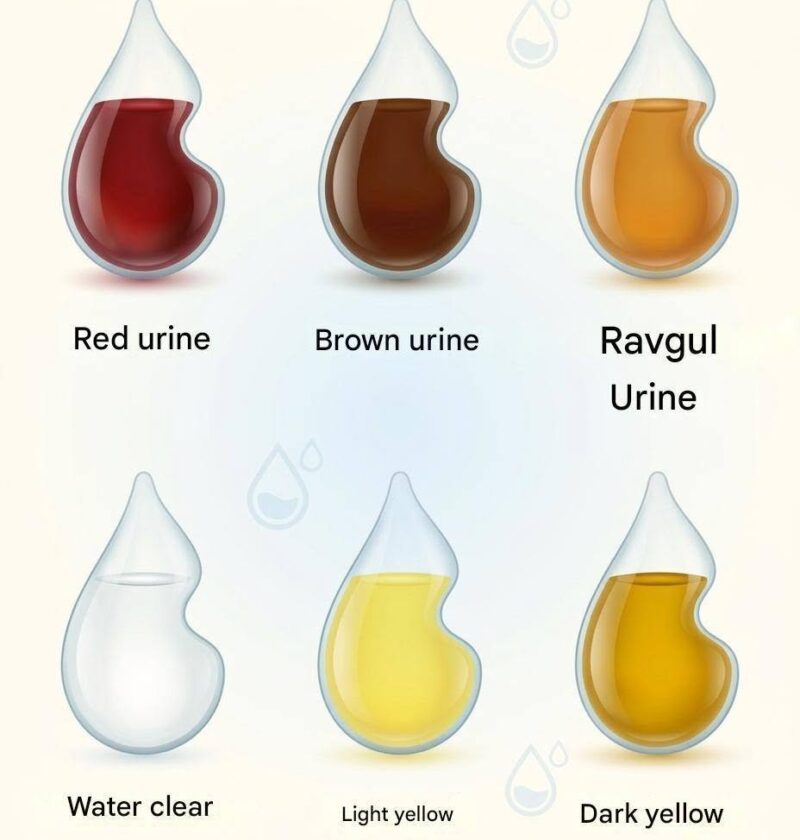
- Pale yellow to clear: Usually indicates good hydration. Completely clear urine all the time may mean you are drinking more water than your body needs.
- Dark yellow or amber: Often a sign that you may need more fluids.
- Orange: Can happen from dehydration, certain foods, or some medications. Persistent orange urine should be checked, especially if accompanied by abdominal pain or yellowing of the skin/eyes.
- Pink or red: May come from foods like beets, but it can also indicate blood in the urine and should be evaluated if unexplained.
- Brown or tea-colored: May be related to severe dehydration, certain medications, muscle breakdown, or liver-related issues and warrants medical advice if persistent.
- Blue or green: Rare; can be caused by dyes, foods, medications, or certain medical conditions.
- Cloudy or milky: May occur with dehydration, infection, crystals, or other causes—especially if there is pain, burning, or fever.
- Foamy urine: Occasional bubbles are common, but persistent excessive foam may be a sign of protein in the urine and should be checked.
Other changes to pay attention to include:
- Burning or pain when urinating
- Strong, unusual odor with other symptoms
- Blood in urine
- A major change in urination frequency or amount
For most people, light straw-yellow urine is a common sign of adequate hydration, but symptoms and patterns over time matter more than a single urine color.