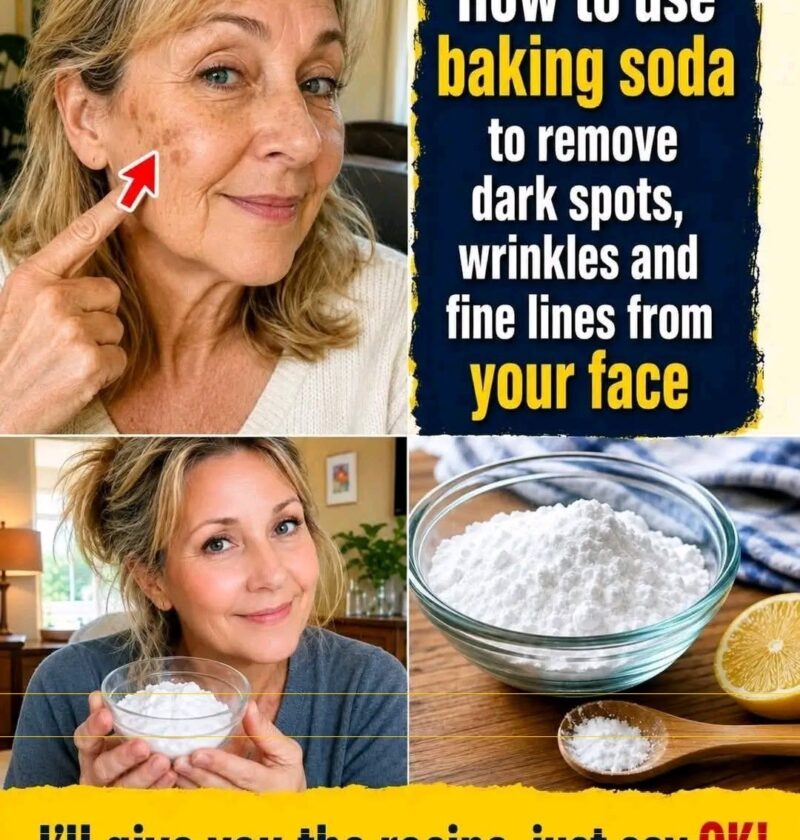
Baking soda (sodium bicarbonate) is often promoted in DIY skincare, but it’s one of those ingredients that needs caution. It has a high pH (~9), while your skin is naturally slightly acidic (~4.5–5.5). That mismatch can disrupt your skin barrier, leading to irritation, dryness, and even worsening dark spots or sensitivity if overused.
Here’s how it’s sometimes used—and what you should realistically expect.
⚠️ First: Is baking soda safe for skin?
Occasional, very diluted use may be tolerated by some people, but:
- It can strip natural oils
- It may worsen dark spots (post-inflammatory pigmentation) in sensitive skin
- It can irritate under-eye skin (very thin and delicate)
- It does not treat wrinkles or true pigmentation long-term
If you have acne, eczema, or sensitive skin, it’s generally better to avoid it.
🌑 Dark spots (hyperpigmentation)
Some people use baking soda as a mild exfoliant:
DIY method (use sparingly):
- 1 teaspoon baking soda
- Enough water to form a thin paste
- Apply only to affected spots (not full face)
- Leave for 30–60 seconds max
- Rinse thoroughly
Reality check:
It may temporarily brighten by removing dead skin, but it does not address melanin production, which causes dark spots. Overuse can actually make pigmentation worse.
👁️ Dark circles
Baking soda is not recommended for under-eye use.
Why:
- Skin under eyes is extremely thin
- High risk of irritation, redness, and dryness
- Dark circles are usually caused by genetics, blood vessels, or pigmentation—not surface buildup
Better options:
- Caffeine eye creams
- Adequate sleep + hydration
- Sunscreen under eyes
- Retinol (low strength, if suitable)
🧓 Wrinkles and fine lines
Baking soda does not reduce wrinkles. In fact:
- It can dry out skin → making fine lines look more visible
- It does not stimulate collagen
Better proven ingredients:
- Retinoids (retinol/retinal)
- Peptides
- Hyaluronic acid
- Sunscreen (most important)
🧴 If you still want to try it (safer use tips)
- Use no more than once a week
- Always dilute well
- Never leave on longer than 1 minute
- Avoid sensitive areas (eyes, lips)
- Moisturize immediately after
- Stop if you feel burning or tightness
🌿 Better natural alternatives (safer & more effective)
If your goal is brighter skin, fewer spots, and smoother texture:
- Aloe vera gel (soothing + healing)
- Honey masks (hydration + antibacterial)
- Oatmeal cleanser (gentle exfoliation)
- Vitamin C serums (for dark spots)
- Niacinamide (very effective for pigmentation and barrier repair)
Bottom line
Baking soda is more of a harsh exfoliant than a skincare treatment. It might give a short-term “clean” feeling, but it’s not a reliable or safe solution for dark spots, wrinkles, or dark circles.
If you want, tell me your skin type (oily, dry, acne-prone, sensitive), and I can suggest a simple routine that actually targets these concerns safely.