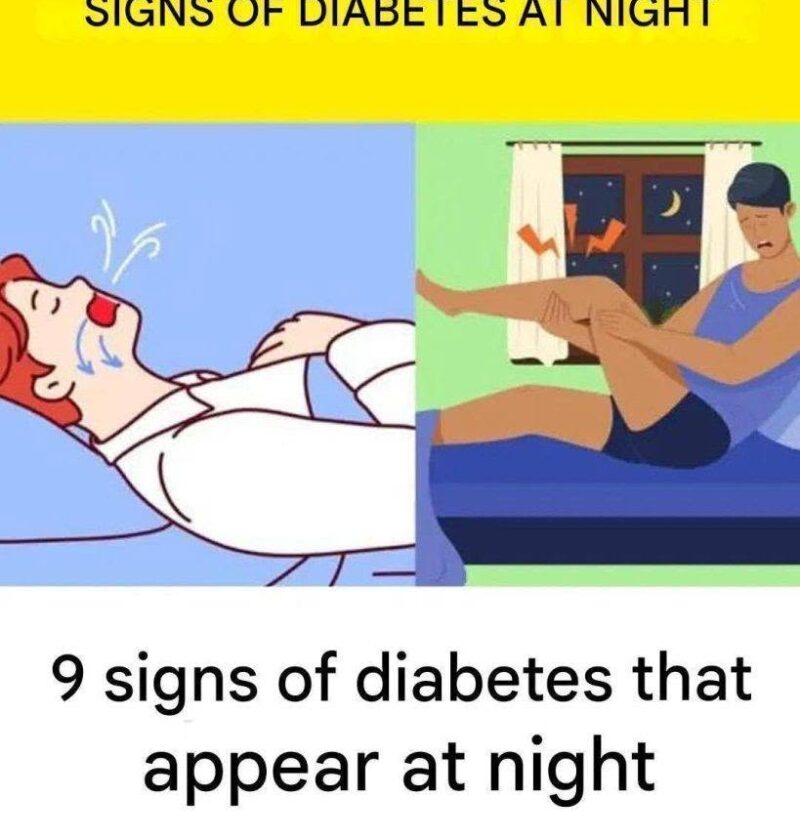
If you’re referring to the common claim that diabetes has specific “night signs,” the idea is that some symptoms may become more noticeable during sleep or nighttime routines. These signs are not proof of diabetes by themselves, but they can be reasons to get blood sugar checked.
9 possible nighttime signs linked with diabetes
- Waking up often to urinate (nocturia)
High blood sugar can cause the kidneys to remove extra glucose through urine, increasing urination. - Excessive thirst at night
Fluid loss from frequent urination may lead to strong thirst, including waking up needing water. - Night sweats
Blood sugar that drops too low during sleep (especially in people taking insulin or certain diabetes medicines) can cause sweating, shakiness, or a racing heart. - Restless sleep or frequent awakenings
Fluctuating blood sugar levels may interfere with sleep quality. - Tingling, burning, or numbness in the feet at night
Diabetes-related nerve damage (diabetic neuropathy) often causes symptoms that feel worse at rest or during nighttime. - Leg cramps or unusual foot discomfort
Nerve problems or circulation issues associated with diabetes may contribute to nighttime discomfort. - Feeling unusually hungry at night
Blood sugar problems can affect how the body uses energy and may cause increased hunger. - Dry mouth or a sticky feeling when waking up
Dehydration from elevated blood sugar can contribute to dry mouth. - Snoring or disrupted breathing during sleep
Obstructive sleep apnea is more common in people with type 2 diabetes and can affect sleep quality.
When to consider testing
A blood glucose test or Hemoglobin A1c test can help identify diabetes or prediabetes. It’s especially worth discussing with a healthcare professional if nighttime symptoms occur along with daytime signs such as increased hunger, unexplained weight loss, blurry vision, slow-healing wounds, or repeated infections.
If you mean this as a health article headline, I can also help rewrite it into a more accurate, evidence-based version.