Urine color is a simple, everyday clue about hydration and sometimes underlying health issues, but it should always be interpreted in context (diet, medications, and fluid intake matter a lot).
Here’s what different colors commonly suggest:
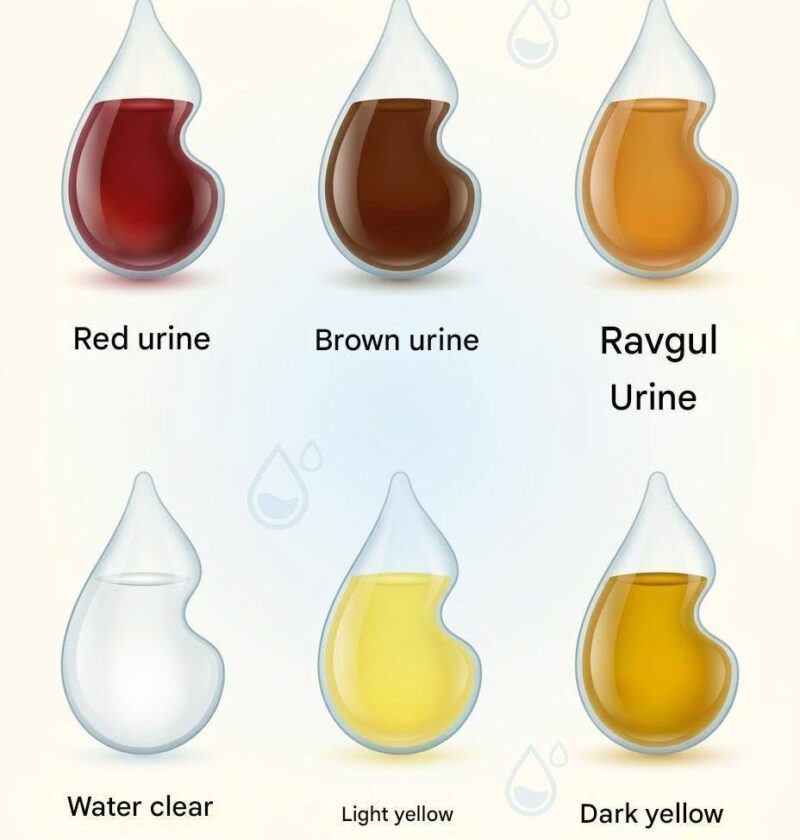
💧 Clear (transparent)
- Very high water intake
- Sometimes overhydration
✔ Usually not dangerous, but if always clear you may be drinking more than needed
💛 Pale yellow (straw color)
- Ideal, healthy urine color
- Good hydration and normal concentration
✔ This is what you generally want to see
🌕 Dark yellow / amber
- Mild dehydration (most common cause)
- Not drinking enough fluids, heat exposure, or sweating
✔ Usually improves by drinking more water
🟠 Orange
- Dehydration
- Certain medications or vitamin B supplements
- Less commonly liver or bile-related issues
⚠ If it persists without a clear cause, it should be checked
🟥 Pink or red
- Can be from foods like beets, berries, or food dyes
- Or blood in urine (UTI, kidney stones, bladder issues)
🚨 If not food-related, medical evaluation is important
🟤 Brown / cola-colored
- Severe dehydration
- Liver or bile problems
- Muscle breakdown (rare but serious)
🚨 Should be checked if unexplained
🟢 Blue or green (rare)
- Certain medications or dyes
- Rare bacterial infections
⚠ Usually harmless if medication-related, but still unusual
🫧 Foamy or very bubbly urine
- Sometimes normal if urine hits water forcefully
- If persistent: possible excess protein (kidney stress)
⚠ Worth checking if it keeps happening
🧠 Quick summary
- Pale yellow = healthy
- Dark = drink more water
- Red/brown/orange (unexplained) = get medical advice
If you want, I can also explain how dehydration affects the body step-by-step or give a simple daily hydration plan based on hot weather conditions like in Pakistan.