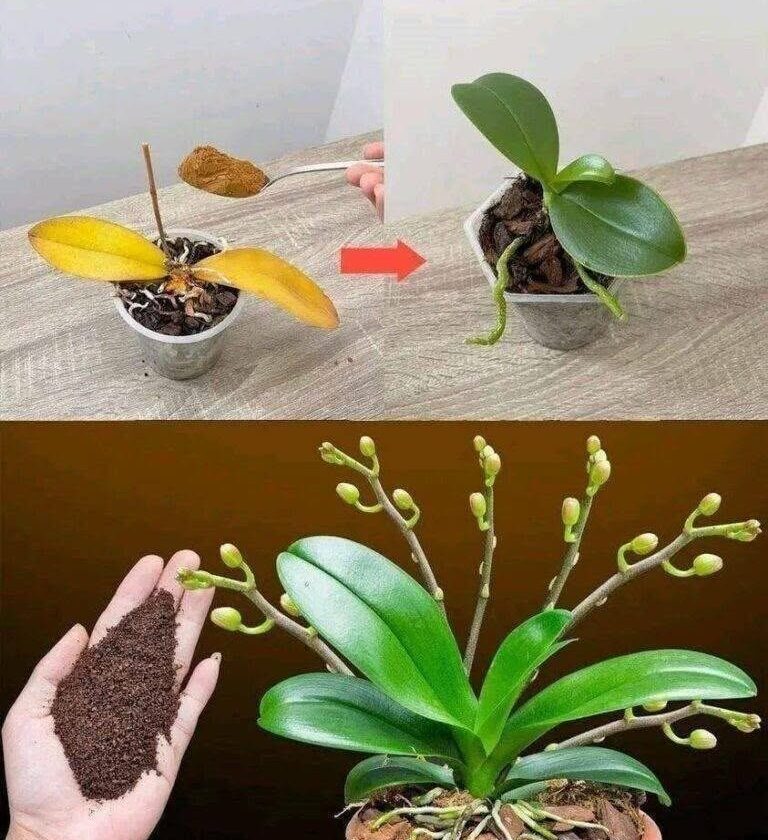
The phrase “Just a teaspoon, suddenly the orchid miraculously blooms with lots of flowers” is a common type of gardening claim, usually referring to a homemade fertilizer or natural plant remedy. There is no scientifically proven “magic teaspoon” ingredient that can instantly make an orchid explode with flowers, but some practices can encourage healthier growth and blooming.
For orchids such as Phalaenopsis orchid, flowering depends mainly on:
1. Proper light
- Bright indirect light is usually best.
- Too little light often causes healthy leaves but few or no flowers.
- Too much direct sun can burn leaves.
2. Correct watering
- Orchids generally prefer drying slightly between waterings.
- Overwatering is one of the most common causes of root problems.
3. Feeding nutrients
A balanced orchid fertilizer (often labeled with nutrients like nitrogen, phosphorus, and potassium) can support growth.
- Use fertilizer at the recommended dilution.
- Too much fertilizer can damage roots.
4. Temperature changes
Many orchids bloom better when they experience a small difference between daytime and nighttime temperatures.
5. Healthy roots
Strong green or silvery roots and good airflow around the roots help orchids thrive.
Some online gardening tips recommend adding things like sugar, rice water, eggshell mixtures, or other kitchen ingredients by the teaspoon, but these can be unreliable and may sometimes encourage mold or harm the plant if used incorrectly.
If you have a specific “teaspoon” recipe in mind (for example cinnamon, rice water, honey, sugar, eggshell powder, or fertilizer), tell me the ingredient and I can explain whether it actually helps orchids.