A hiatal hernia occurs when part of the stomach pushes upward through the diaphragm (the muscle that separates the chest from the abdomen) into the chest area. Some people have no symptoms, while others may experience discomfort, especially after eating.
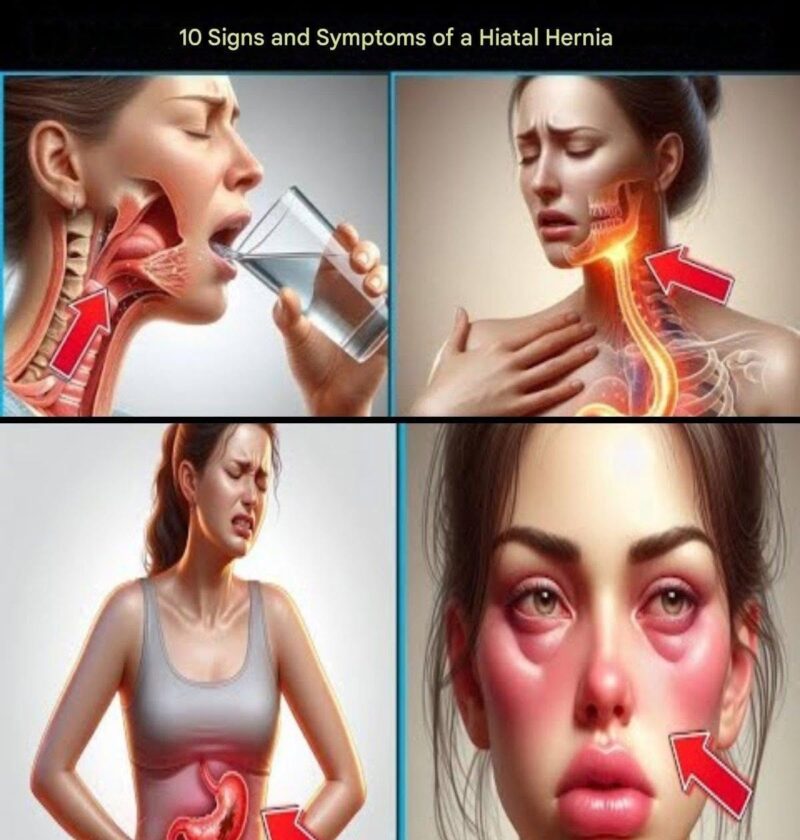
10 Signs and Symptoms of Hiatal Hernia
- Heartburn
- A burning sensation in the chest, often after meals or when lying down, caused by acid reflux.
- Acid reflux or regurgitation
- Stomach acid or food may flow back into the throat or mouth, causing a sour taste.
- Chest discomfort or pain
- A hiatal hernia can cause pressure, burning, or discomfort in the chest that may sometimes be confused with heart-related pain.
- Difficulty swallowing (dysphagia)
- Some people feel that food gets stuck or moves slowly down the esophagus.
- Feeling full quickly
- A hiatal hernia may contribute to early fullness, especially after eating smaller amounts.
- Frequent belching
- Increased burping can occur due to reflux and changes in the stomach’s position.
- Bloating or upper abdominal discomfort
- Some people experience pressure, bloating, or discomfort in the upper abdomen.
- Nausea
- Reflux-related irritation may cause feelings of nausea.
- Chronic cough or throat irritation
- Acid reaching the throat can trigger coughing, hoarseness, or a “lump in the throat” sensation.
- Worsening symptoms when lying down or bending over
- Certain positions can make reflux symptoms more noticeable.
When to seek medical advice
Contact a healthcare professional if you have:
- Severe or persistent chest pain
- Trouble swallowing that is getting worse
- Vomiting blood or black stools
- Unexplained weight loss
- Symptoms that do not improve with lifestyle changes or treatment
Many hiatal hernia symptoms overlap with other conditions, so persistent chest discomfort or swallowing problems should be evaluated rather than assumed to be from a hernia.