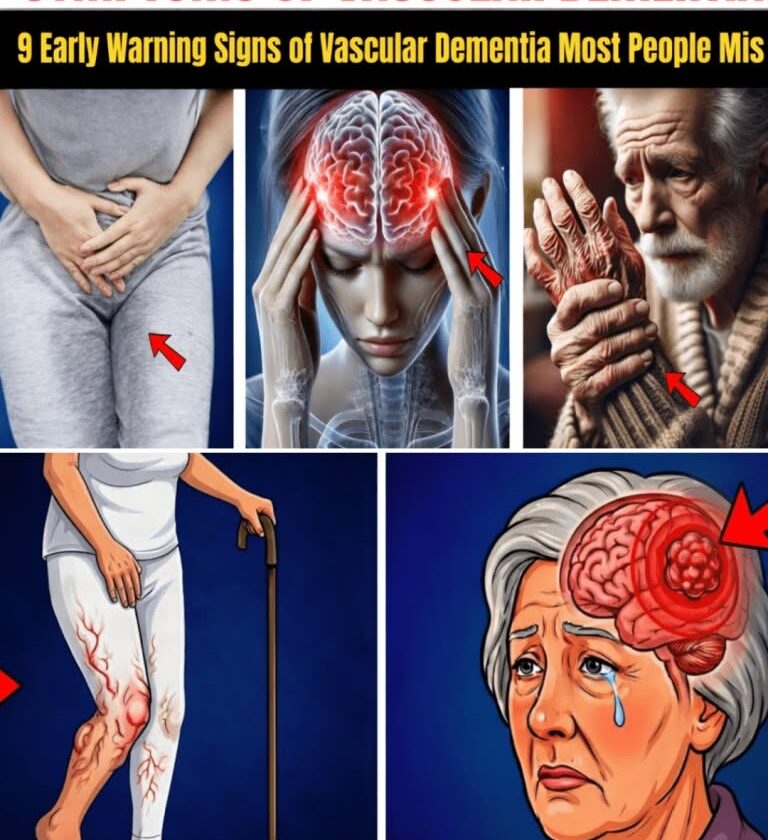
The phrase “9 early signs of vascular dementia most people overlook” is a common health-content headline. While there is no single symptom that proves someone has vascular dementia, there are early changes that can be easy to miss. Vascular dementia happens when damage to the brain’s blood vessels reduces blood flow and harms brain tissue.
Possible early signs include:
- Slower thinking and processing
- Taking longer to understand information, make decisions, or complete familiar tasks.
- Problems with planning and organization
- Difficulty managing bills, schedules, medications, cooking steps, or multitasking.
- Changes in walking or balance
- A slower gait, unsteadiness, or increased falls can occur because vascular damage may affect brain areas involved in movement.
- Difficulty concentrating
- Losing focus more easily or struggling to follow conversations.
- Mood and personality changes
- Increased irritability, apathy, depression, anxiety, or emotional changes.
- Memory problems
- Forgetting appointments, conversations, or recent events (though memory loss may not always be the first or main symptom).
- Difficulty finding words
- Pausing often, using incorrect words, or having trouble expressing thoughts.
- Reduced ability to handle everyday tasks
- Needing more help with activities that were previously routine.
- Symptoms that worsen in a step-like pattern
- Some people experience noticeable declines after strokes or small blood vessel injuries rather than a smooth, gradual progression.
When to seek medical advice:
New or worsening confusion, sudden weakness, speech problems, vision changes, severe dizziness, or sudden loss of coordination may indicate a stroke and require urgent medical attention.
Early evaluation can help identify treatable causes, manage vascular risk factors (such as high blood pressure, diabetes, and high cholesterol), and plan appropriate support. A healthcare professional can assess symptoms and may use cognitive testing and brain imaging if needed.