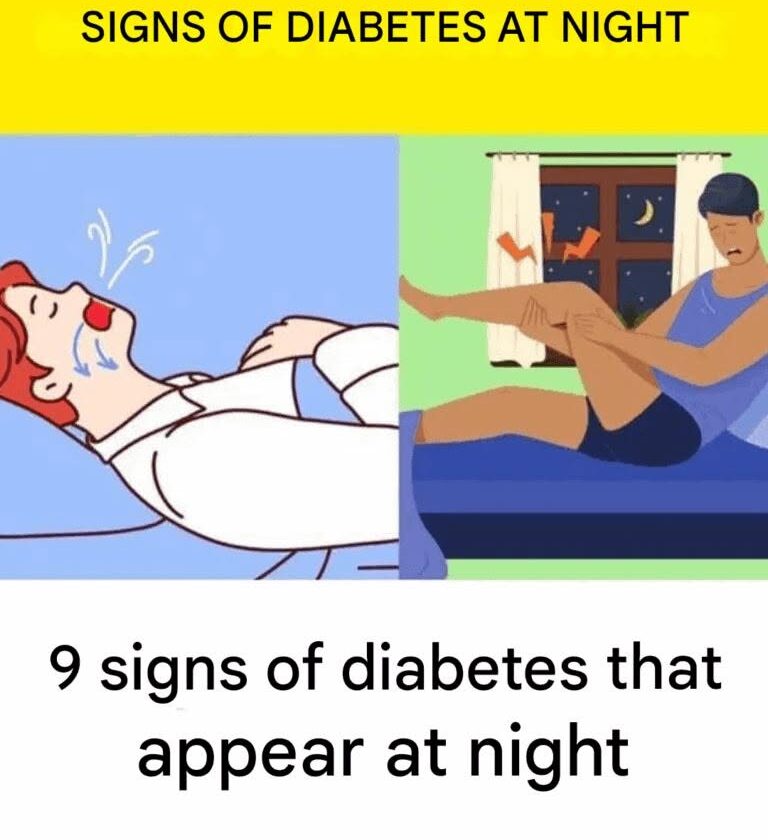
Headlines like “9 signs of diabetes that appear at night” are usually overstated. Diabetes Mellitus doesn’t have a separate “night-only” symptom list—what happens is that blood sugar changes become more noticeable at night when the body is resting.
Here are real, medically recognized nighttime symptoms that can be associated with blood sugar problems:
1. Frequent nighttime urination
Waking up multiple times to urinate (nocturia) can happen when high blood sugar causes excess glucose loss in urine.
2. Excessive thirst at night
Dry mouth or waking up needing water often.
3. Night sweats
Can occur due to blood sugar fluctuations, especially low blood sugar episodes.
4. Nighttime hunger or cravings
Some people wake up hungry due to unstable glucose levels.
5. Restless sleep or insomnia
Blood sugar swings can disturb sleep cycles.
6. Headaches in the early morning
Sometimes linked to overnight glucose changes or dehydration.
7. Waking up feeling tired
Poor overnight glucose control can lead to non-restorative sleep.
8. Nighttime tingling or discomfort in feet
In longer-standing diabetes, nerve irritation (neuropathy) can cause burning or tingling sensations.
9. Unexplained nighttime anxiety or sweating
Low blood sugar episodes (more common in people already on diabetes medication) can trigger stress hormone release.
Important clarification
These symptoms are not exclusive to diabetes. They can also come from:
- Excess fluid intake before bed
- Stress or anxiety
- Urinary tract issues
- Sleep disorders
- Caffeine intake late in the day
When to actually get tested
You should consider a blood sugar test if you have:
- Repeated nighttime urination + thirst
- Unexplained weight loss
- Blurred vision
- Slow wound healing
- Strong family history of diabetes
Bottom line
Night symptoms alone do not confirm diabetes. They are warning clues, not a diagnosis.
If you want, I can help you quickly assess your risk based on your age, diet, and symptoms, or explain simple home tests like fasting glucose vs HbA1c.