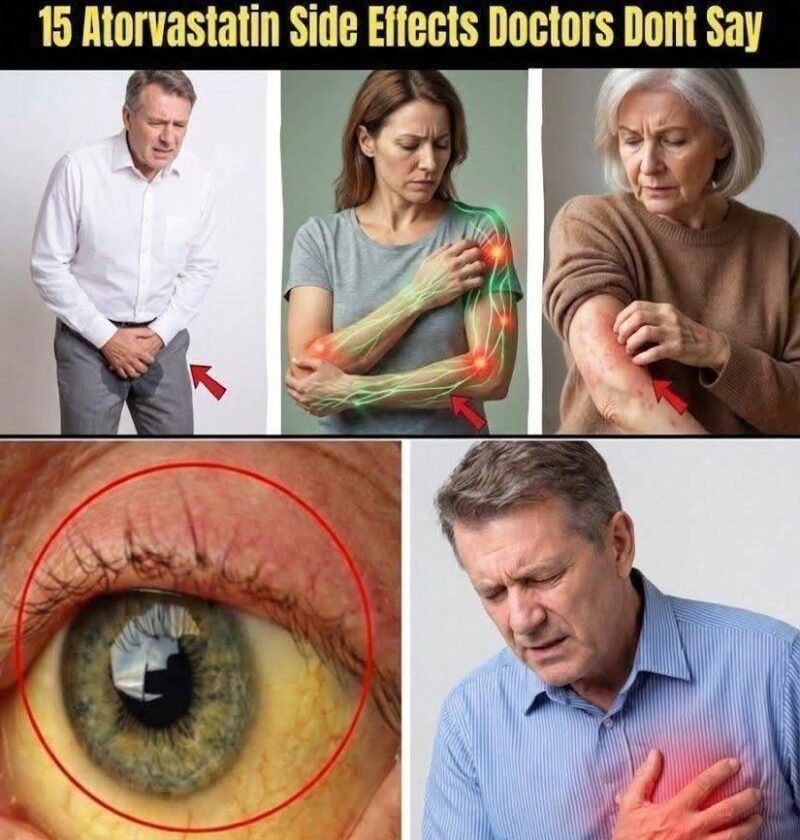
The headline “ATORVASTATIN SIDE EFFECTS: 15 Hidden Dangers Your Doctor May Not Tell You About” is sensationalized. Atorvastatin is a widely used statin medication that has been studied extensively and is prescribed because it can lower LDL (“bad”) cholesterol and reduce the risk of heart attack and stroke in appropriate patients.
Like all medicines, atorvastatin can cause side effects. Most people tolerate it well, but possible effects include:
- Muscle aches or soreness – one of the most commonly reported concerns.
- Muscle weakness – especially if persistent or worsening.
- Digestive symptoms – such as nausea, diarrhea, or stomach discomfort.
- Headache – reported by some people.
- Mild increases in liver enzymes – usually found through blood tests and often not associated with symptoms.
- Sleep problems – some people report changes in sleep, though evidence is mixed.
- Blood sugar changes – statins may slightly increase blood glucose levels in some people, particularly those already at risk for diabetes.
Rare but serious side effects can include:
- Severe muscle injury (rhabdomyolysis) — very uncommon, but symptoms such as severe muscle pain, weakness, or dark urine require urgent medical attention.
- Serious liver problems — rare; symptoms like yellowing of the skin/eyes, dark urine, or unusual severe fatigue should be checked.
Important points:
- Do not stop atorvastatin suddenly because of something you read online. Stopping it without medical guidance may increase cardiovascular risk for people who need it.
- Tell your healthcare professional about other medicines or supplements you take, because some combinations can increase side-effect risk.
- If you develop new symptoms after starting atorvastatin, discuss them with your clinician; sometimes adjusting the dose, changing timing, or trying another statin can help.
If you have a specific list of the “15 hidden dangers” from the post, share it and I can go through which claims are supported by evidence and which are myths.