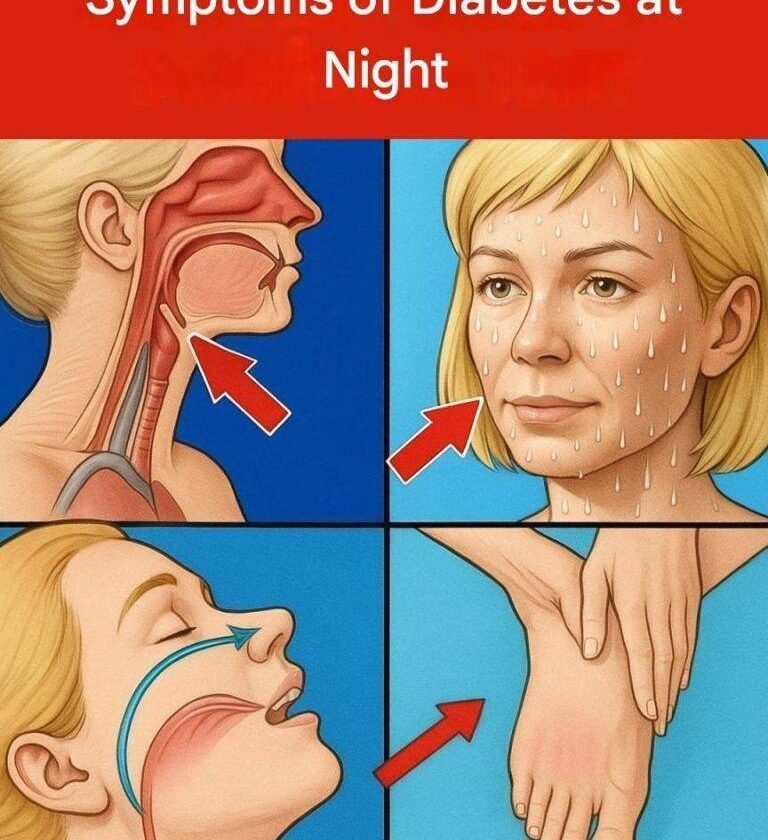
Night-time symptoms of Diabetes Mellitus (including both Type 1 and Type 2, especially Type 2 Diabetes) often show up subtly during sleep. Many people miss them because they happen while resting, but they can be early warning signs of poor blood sugar control.
1. Frequent night urination (nocturia)
High blood sugar forces the kidneys to work harder to remove excess glucose. This increases urine production, causing repeated trips to the bathroom at night. If you’re waking up more than once regularly, it can be a sign of elevated glucose levels.
2. Night sweats
Sudden sweating during sleep can happen when blood sugar drops too low (nocturnal hypoglycemia) or fluctuates rapidly. The body releases stress hormones like adrenaline to correct sugar levels, which can trigger sweating and a racing heartbeat.
3. Waking up thirsty or dry mouth
When blood sugar is high, the body loses more fluid through urine, leading to dehydration. This often causes a strong feeling of thirst at night or immediately upon waking, even after drinking fluids before bed.
4. Restless or disturbed sleep
Blood sugar swings can affect sleep quality. Some people experience frequent waking, vivid dreams, or difficulty staying asleep due to discomfort from high or low glucose levels.
5. Tingling, burning, or discomfort in feet
Early nerve irritation (diabetic neuropathy) can feel worse at night when you’re lying still. Many people notice tingling, pins-and-needles, or burning sensations in the feet or lower legs that disturb sleep.
If these symptoms are happening regularly, it’s worth checking blood glucose levels and discussing them with a healthcare professional. Early detection makes a significant difference in managing diabetes and preventing complications.