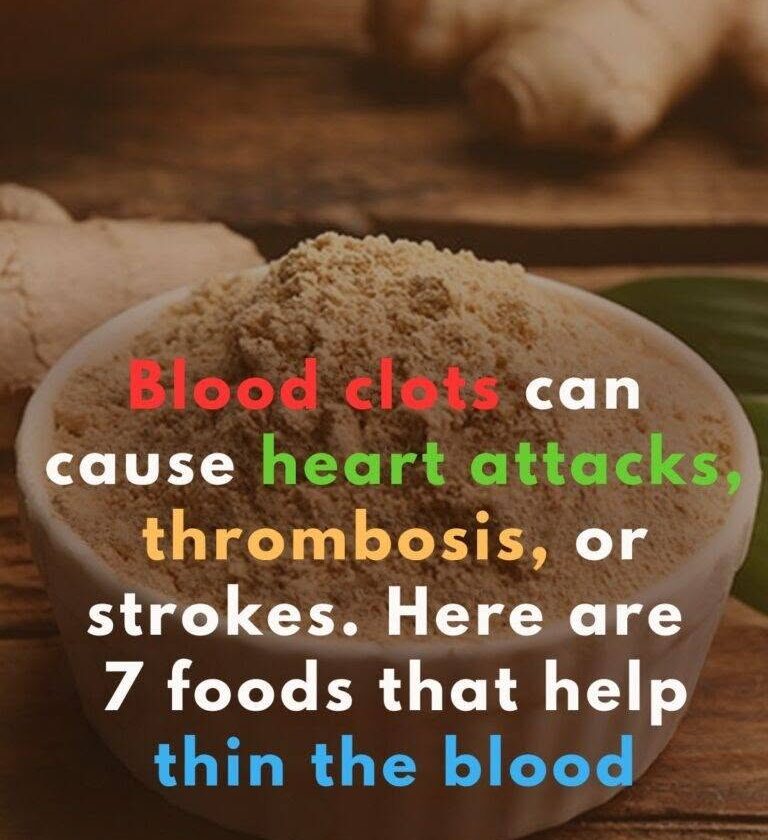
The phrase “7 powerful blood-thinning foods” can be misleading. Some foods contain compounds that may have mild effects on blood clotting or cardiovascular health, but they do not work like prescription blood thinners and should not be used to replace medications.
Some foods that have been studied for possible effects on circulation and heart health include:
- Fatty fish (salmon, sardines, mackerel)
- Rich in omega-3 fatty acids, which may have mild effects on platelet function and support heart health.
- Garlic
- Contains sulfur compounds that may influence platelet activity and blood vessel health.
- Ginger
- Some research suggests ginger may affect platelet aggregation, though effects vary and are not a substitute for medication.
- Turmeric
- Curcumin has anti-inflammatory properties and has been studied for possible effects on blood clotting pathways.
- Berries
- Rich in polyphenols and antioxidants that support vascular health.
- Leafy green vegetables
- Provide nutrients important for circulation and overall cardiovascular health. (People taking warfarin should keep vitamin K intake consistent rather than making sudden large changes.)
- Nuts and seeds
- Provide healthy fats and nutrients that support heart health.
Important safety note
If you take blood-thinning medication (such as warfarin, apixaban, rivaroxaban, or aspirin), or you have a bleeding disorder, talk with a healthcare professional before making large dietary changes or taking concentrated supplements.
Bottom line: These foods can be part of a heart-healthy diet, but they do not “thin the blood” in the same way as medical anticoagulant or antiplatelet drugs. Your overall diet, health conditions, and medications matter most.