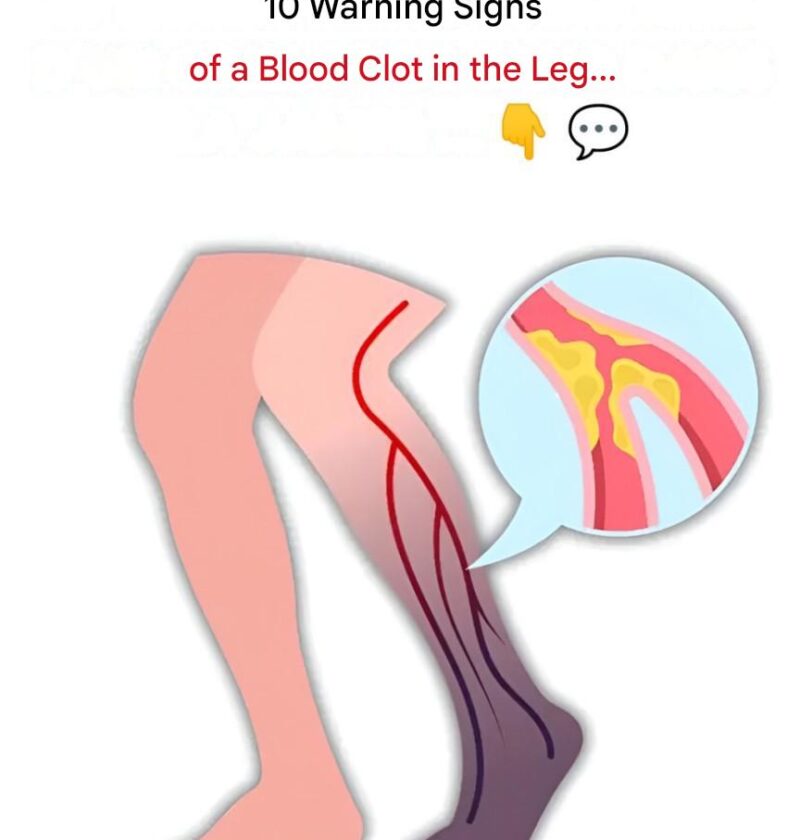
A blood clot in the leg is usually referring to deep vein thrombosis (DVT) — a condition where a clot forms in a deep vein, most often in the calf or thigh. It can be dangerous because part of the clot may break off and travel to the lungs (pulmonary embolism).
Here are the 10 main signs and symptoms of a blood clot in the leg (DVT):
1. Swelling in one leg
One of the most common signs. The swelling usually happens in a single leg (not both) and may come on suddenly or gradually.
2. Pain or tenderness
Often feels like a cramp or soreness in the calf or thigh. It may worsen when walking, standing, or flexing the foot.
3. Warmth in the affected area
The skin over the clot may feel noticeably warmer compared to the other leg.
4. Red or discolored skin
The skin may look red, bluish, or darker than normal, especially along the vein.
5. Visible enlarged veins
Surface veins may become more noticeable or appear swollen as blood flow is affected.
6. Leg heaviness or aching
A persistent feeling that the leg is “heavy,” tight, or under pressure.
7. Pain when flexing the foot upward
Sometimes called a “positive Homan’s sign” (though not reliable alone), where calf pain increases when the foot is pulled upward.
8. Hard or thickened vein
You may feel a firm cord-like structure under the skin along the vein.
9. One-sided leg discomfort that doesn’t improve
Unlike muscle strain, DVT pain tends to persist and doesn’t get better with rest or massage.
10. Mild fever (sometimes)
A low-grade fever can occur as the body reacts to the clot.
Important warning
Deep vein thrombosis can develop without obvious symptoms. If you also experience sudden shortness of breath, chest pain, coughing blood, or rapid heartbeat, it may mean the clot has traveled to the lungs — this is a medical emergency.
Key prevention tips
- Stay active; avoid long periods of sitting or lying still
- Move your legs during long travel (walk or flex ankles)
- Stay hydrated
- Maintain a healthy weight
- Avoid smoking
- Follow medical advice if you have risk factors (recent surgery, pregnancy, or clotting disorders)
If you want, I can also explain how DVT is diagnosed, who is most at risk, or how to distinguish it from muscle pain or sciatica.