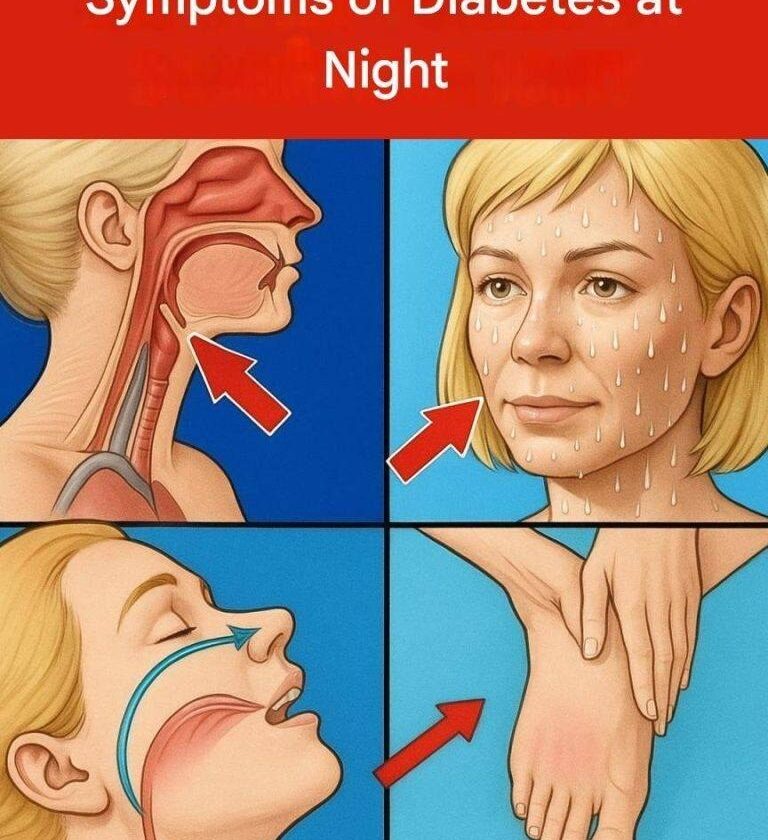
Night-time symptoms of diabetes can be especially noticeable because the body is fasting, hormones fluctuate, and blood sugar regulation becomes less stable during sleep. Here are 5 common diabetes-related symptoms that often appear or worsen at night:
1) Frequent nighttime urination (nocturia)
People with undiagnosed or poorly controlled Type 2 Diabetes often wake up multiple times to urinate. High blood sugar forces the kidneys to remove excess glucose through urine, which increases urine production—especially noticeable at night.
2) Excessive thirst during the night
Waking up feeling very thirsty is closely linked to fluid loss from frequent urination. As the body tries to compensate for dehydration, thirst becomes more intense, sometimes interrupting sleep repeatedly.
3) Night sweats or sudden temperature changes
Blood sugar fluctuations at night—especially drops in glucose—can trigger sweating, chills, or feeling unusually warm. This is more common in people using insulin or certain diabetes medications.
4) Nighttime hypoglycemia (low blood sugar symptoms)
Some people experience low blood sugar during sleep, especially if they skip meals, exercise late, or take glucose-lowering medication. Symptoms may include sweating, nightmares, restlessness, rapid heartbeat, or waking up confused or shaky.
5) Restless sleep or insomnia
High or low blood sugar can both disrupt sleep quality. You might notice frequent waking, difficulty staying asleep, vivid dreams, or overall poor sleep despite feeling tired.
If these symptoms happen regularly, they can be an early sign of diabetes or indicate that blood sugar is not well controlled. A simple blood glucose test (fasting or HbA1c) can help clarify what’s going on.
If you want, I can also explain how to tell whether nighttime symptoms are from high vs low blood sugar—they feel very similar but mean very different things.