If you’re referring to claims about cassava leaves as a health remedy, it’s important to know that cassava leaves can contain cyanogenic compounds (which can release cyanide) if they are not prepared properly.
Cassava leaves: safer use
- Do not eat raw cassava leaves.
- They should be properly processed (such as thorough washing, chopping, soaking/fermenting in some traditional methods, and cooking well) to reduce harmful compounds.
- Preparation methods vary by region, and safe practices depend on the cassava variety and local food traditions.
Nutrition
When properly prepared, cassava leaves can provide nutrients such as:
- Fiber
- Vitamin C
- Some minerals
- Plant-based protein
Be cautious with health claims
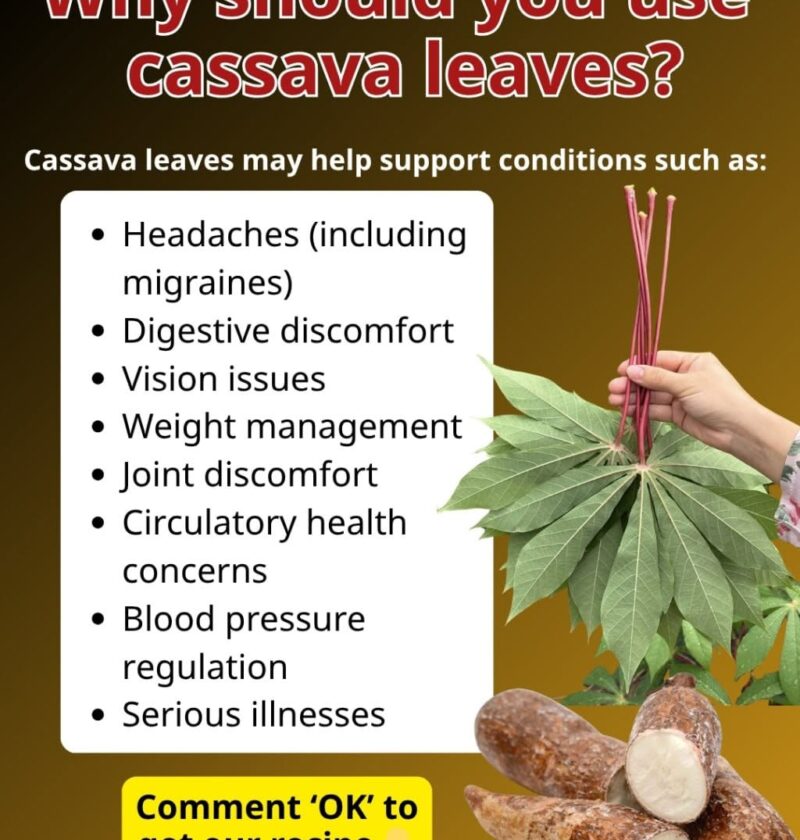
Cassava leaves are sometimes promoted online as a treatment for conditions like diabetes, high blood pressure, or cancer, but strong clinical evidence for these claims is limited.
If you mean a specific recipe or traditional method for preparing cassava leaves, tell me your country or the method you heard about, and I can help check whether it’s safe.