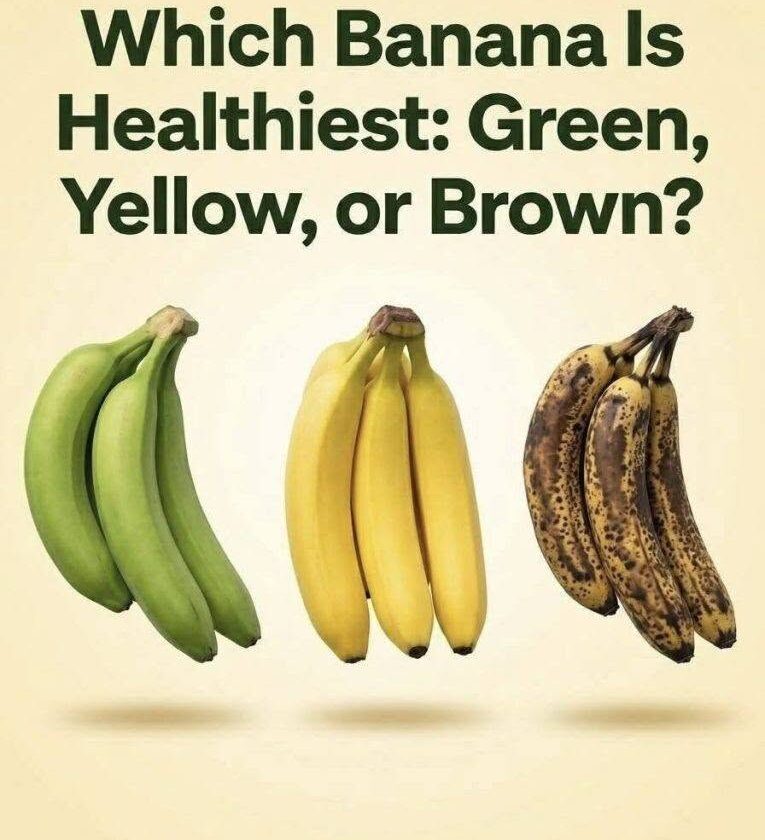
The “best” banana depends on what health benefit you’re looking for. The color mainly reflects ripeness, which changes the banana’s sugar content, texture, and type of carbohydrates.
🍌 Green bananas (unripe)
Best for: gut health and steadier blood sugar
- Higher in resistant starch, a type of carbohydrate that acts like fiber and feeds beneficial gut bacteria.
- Usually lower in sugar than ripe bananas.
- Firmer and less sweet.
- May be a better choice for some people watching blood sugar levels.
🍌 Yellow bananas (ripe)
Best for: everyday nutrition and easy digestion
- A good balance of fiber, natural sugars, vitamins, and minerals.
- Softer and easier to digest than green bananas.
- A convenient source of potassium, vitamin B6, and carbohydrates for energy.
🍌 Brown-spotted bananas (very ripe)
Best for: quick energy and cooking
- Higher in naturally occurring sugars and sweeter taste.
- Easier to digest for many people.
- Great for smoothies, oatmeal, and baking.
- The brown spots do not mean the banana is spoiled; they usually indicate ripening.
Which one is “healthiest”?
There is no single winner:
- For more fiber-like resistant starch: green bananas may have an advantage.
- For balanced daily eating: yellow bananas are a great choice.
- For quick energy or recipes: ripe brown-spotted bananas work well.
People with diabetes or blood sugar concerns may want to pay attention to portion size and choose less-ripe bananas more often, while considering their overall meal composition.