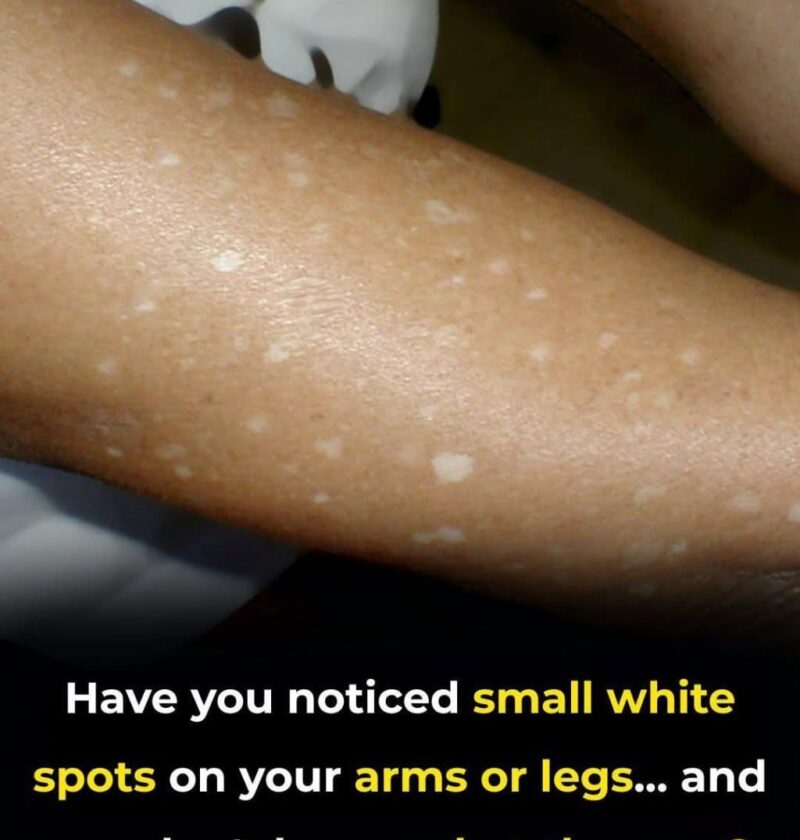
Small white spots on the arms or legs can have several different causes. The most common possibilities include:
- Idiopathic guttate hypomelanosis (IGH) – Tiny (2–5 mm), smooth, flat white spots that usually appear on the forearms, shins, and other sun-exposed areas. They’re more common with age and long-term sun exposure. They are harmless and don’t require treatment.
- Tinea versicolor – A superficial fungal infection that causes lighter or darker patches, often on the chest, back, neck, or upper arms. The patches may have fine scaling and can be mildly itchy.
- Vitiligo – A condition in which the immune system attacks pigment-producing cells, leading to sharply defined white patches. The patches often enlarge over time.
- Post-inflammatory hypopigmentation – Lighter areas of skin that develop after eczema, psoriasis, insect bites, burns, or other skin injuries. Pigment often returns gradually over months.
- Nutritional deficiencies or other medical conditions – Less commonly, certain vitamin deficiencies or autoimmune conditions can contribute to changes in skin pigmentation, although they usually aren’t the sole cause of small white spots.
When to see a healthcare professional
Consider seeing a primary care clinician or dermatologist if:
- The spots are spreading or changing rapidly.
- They are itchy, painful, or scaly.
- You have white patches on your face, hands, or around your mouth or eyes.
- You’re concerned about the diagnosis or want treatment options.
General skin care
- Use sunscreen daily to reduce contrast between affected and unaffected skin and help prevent sun damage.
- Avoid picking or scrubbing the spots.
- If a fungal infection is suspected, an antifungal treatment may be appropriate, but it’s best to confirm the diagnosis first.
If you can describe the spots (their size, whether they’re raised or flat, itchy or not, and where exactly they’re located) or upload a clear photo, I can help narrow down the possibilities.