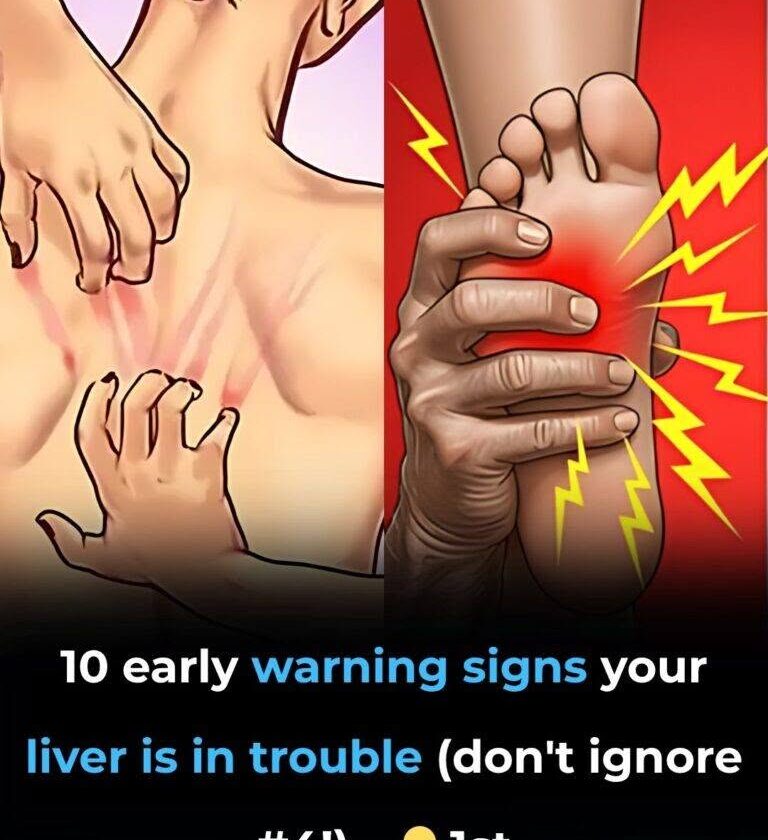
The title “10 early warning signs your liver is in trouble (don’t ignore #4!)” is written in a clickbait style, but liver problems can sometimes develop quietly. Many symptoms are not specific to the liver, so they should be interpreted in context and checked by a healthcare professional if persistent.
Possible warning signs that may occur with liver disease include:
- Unusual tiredness or weakness
Persistent fatigue can occur when the liver is not functioning properly, though it has many other possible causes. - Yellowing of the skin or eyes (jaundice)
This can happen when bilirubin builds up in the body and is an important symptom that deserves medical attention. - Dark urine or unusually pale stools
Changes in bile processing can affect urine and stool color. - Swelling in the legs, ankles, or abdomen
Fluid buildup (such as abdominal swelling called ascites) can occur in more advanced liver disease and should not be ignored. - Easy bruising or bleeding
The liver makes proteins involved in blood clotting, so reduced function can affect bleeding control. - Loss of appetite or unexplained weight loss
Ongoing appetite changes can occur with many illnesses, including liver conditions. - Nausea or discomfort in the upper right abdomen
The liver is located in this area, though pain there can have other causes as well. - Itchy skin
Some liver and bile duct problems can cause widespread itching. - Confusion, trouble concentrating, or unusual sleep changes
In severe liver dysfunction, toxins can affect brain function (hepatic encephalopathy). - Spider-like blood vessels or redness in the palms
Certain chronic liver conditions can cause skin changes.
Risk factors that increase the chance of liver disease include:
- Heavy alcohol use
- Hepatitis infections
- Obesity and metabolic syndrome
- Diabetes
- Certain medications or supplements that can harm the liver
If someone has yellow eyes/skin, vomiting blood, black stools, severe confusion, a swollen abdomen, or sudden worsening symptoms, they should seek medical care urgently.
A blood test (such as liver enzymes and bilirubin) and, when needed, imaging can help determine whether the liver is under stress.