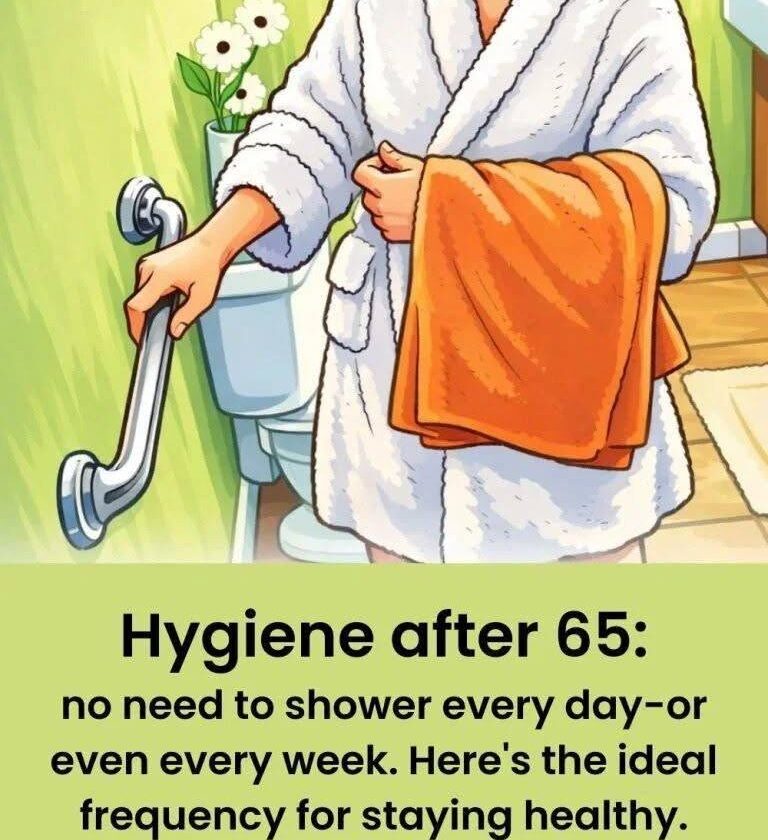
The title “Why Daily Showers After 65 May Do More Harm Than Good” is a common health headline style. The reality is more nuanced: showering every day is not automatically harmful for older adults, but some people’s skin becomes more sensitive with age, and certain shower habits can contribute to dryness or irritation.
Why skin may react differently after 65
- Thinner, drier skin
- Aging skin often produces less oil, making it easier to become dry, itchy, or irritated.
- Hot water can strip natural oils
- Long, hot showers may remove protective oils from the skin and worsen dryness.
- Harsh soaps may cause irritation
- Strongly scented soaps or antibacterial products can be drying for some people.
- Reduced skin barrier function
- Older skin may take longer to recover from irritation or small cracks.
How to shower in a skin-friendly way
- Use warm rather than very hot water.
- Keep showers reasonably short.
- Use gentle, fragrance-free cleansers, especially on areas that need cleaning.
- Apply a moisturizer soon after drying off.
- Avoid vigorous scrubbing, which can irritate fragile skin.
Is daily showering necessary?
It depends on the person:
- People who sweat heavily, work around dirt, or have certain medical needs may benefit from daily bathing.
- Others may stay comfortable and clean with less frequent full showers while washing key areas regularly.
For older adults, the goal is not to avoid bathing—it is to protect the skin while maintaining hygiene and comfort.
If someone develops persistent itching, cracks, rashes, sores, or sudden skin changes, it is worth discussing with a healthcare professional because those symptoms may have causes beyond showering habits.