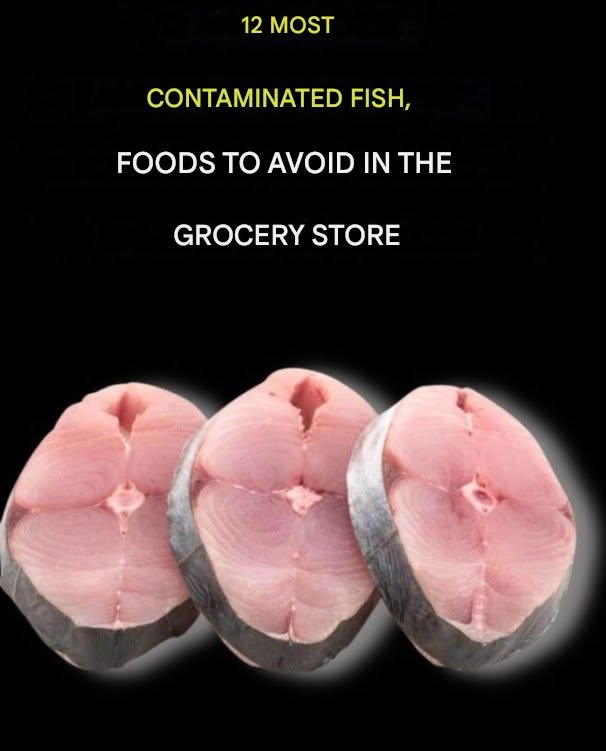
The title “The 12 Most Contaminated Fish to Avoid at the Grocery Store” is often used in alarm-style food posts. The reality is more balanced: fish can contain contaminants such as mercury or environmental pollutants, but many fish are also among the healthiest protein choices. The level of risk depends on the species, where it was caught, and how much is eaten.
Fish that are often limited because of higher mercury levels
Large, long-lived predatory fish tend to accumulate more mercury. Examples include:
- Shark
- Swordfish
- King mackerel
- Marlin
- Orange roughy
- Bigeye tuna
- Tilefish from certain regions
- Some types of tuna (especially large tuna species)
These fish are not necessarily “poisonous,” but frequent consumption can increase mercury exposure.
Fish that may have contamination concerns depending on source
- Imported farmed fish from poorly regulated sources
- Farming practices vary greatly by country and producer.
- Fish from polluted local waters
- Local advisories may restrict eating certain species due to chemicals such as PCBs or mercury.
- Older, larger freshwater fish
- They may accumulate more contaminants over time.
- Fish with unclear labeling or origin
- Knowing the species and where it came from helps assess risk.
Better choices that are generally lower in mercury
Many health organizations commonly recommend options such as:
- Salmon
- Sardines
- Trout
- Anchovies
- Herring
- Shrimp
- Pollock
- Light canned tuna (typically lower mercury than some larger tuna types)
How to choose fish safely
- Eat a variety of seafood rather than relying on one type.
- Check local fish advisories if eating fish you catch yourself.
- Choose sustainably and responsibly sourced seafood when possible.
- Consider your personal situation (pregnancy, age, and health conditions may change recommendations).
Fish provides important nutrients, including protein, vitamin D, iodine, selenium, and omega-3 fatty acids. The goal is usually choosing the right fish and eating it in appropriate amounts, not avoiding seafood altogether.