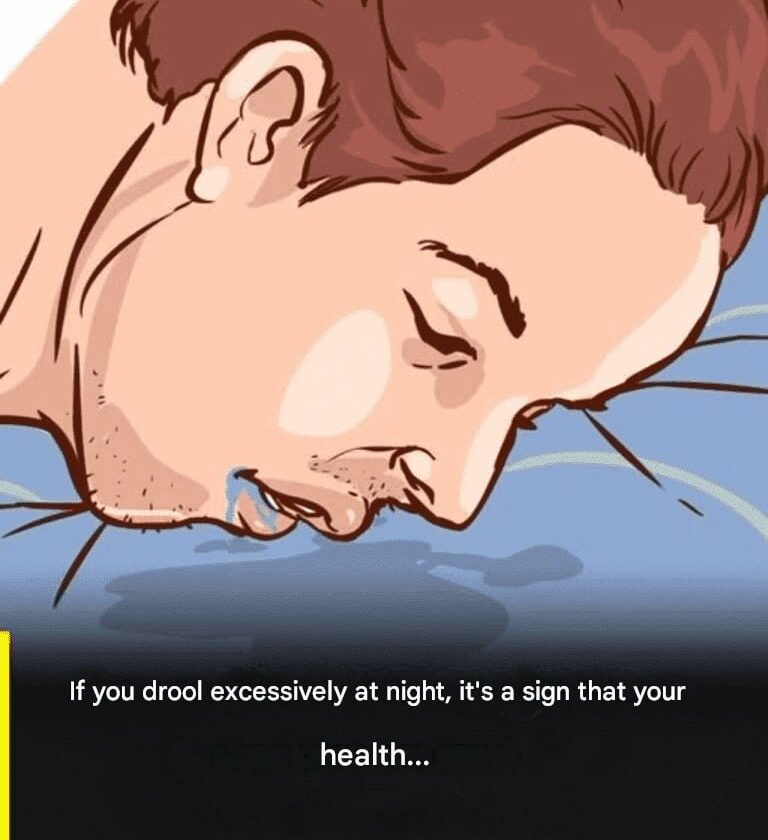
Excessive drooling can be completely harmless in some situations, but in others it may point to an underlying health issue. The medical term is Sialorrhea.
When drooling is often harmless
😴 During sleep
Many people drool occasionally because:
- they sleep on their side or stomach
- their mouth falls open during sleep
- saliva pools and escapes more easily
🤧 Temporary congestion
A blocked nose from a cold or allergies can force mouth breathing, which may increase nighttime drooling.
When drooling may be a health warning sign
1. Acid reflux
Gastroesophageal reflux disease (GERD) can sometimes trigger increased saliva production.
2. Oral or dental problems
- gum disease
- mouth infections
- poorly fitting dentures
3. Medication side effects
Some medications can increase saliva production or affect swallowing.
4. Neurological conditions
Problems with swallowing or muscle control can lead to drooling. Examples include:
- Parkinson’s disease
- Stroke
- certain other neurological disorders
In these cases, the issue is often difficulty managing normal saliva rather than producing too much of it.
5. Sleep disorders
Conditions such as sleep apnea may contribute to mouth breathing and drooling during sleep.
When to see a doctor
Consider medical evaluation if:
- drooling starts suddenly
- it is severe or worsening
- you have trouble swallowing
- you choke or cough when eating or drinking
- you have speech changes, facial weakness, or other neurological symptoms
- it significantly affects daily life
Bottom line
Occasional drooling—especially during sleep—is usually harmless. However, persistent, excessive, or newly developed drooling can sometimes signal an underlying issue involving swallowing, oral health, reflux, medication effects, or the nervous system. If it’s new, worsening, or accompanied by other symptoms, it’s worth discussing with a healthcare professional.