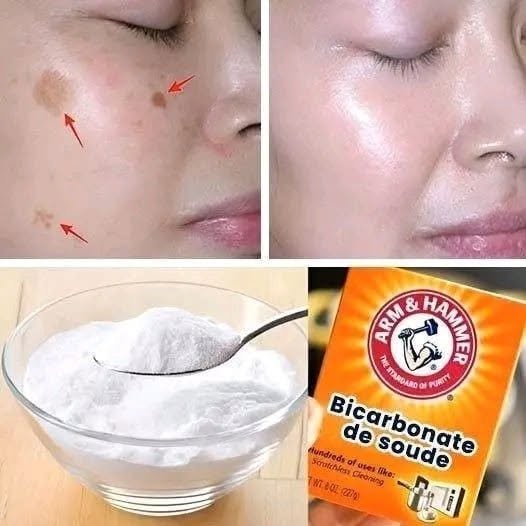
Baking soda is a common household ingredient, but there is limited scientific evidence that it can remove dark spots, wrinkles, or dark circles, and applying it directly to your face can sometimes cause problems. Baking soda is alkaline (high pH), while healthy skin is slightly acidic, so frequent use may disrupt the skin barrier, causing dryness, irritation, redness, or worsening pigmentation.
If you still want to use baking soda cautiously
A safer approach is to avoid using it as a facial treatment and instead use gentler, proven ingredients.
For dark spots (hyperpigmentation)
Ingredients with better evidence include:
- Vitamin C — helps brighten uneven skin tone
- Niacinamide — can reduce the appearance of dark spots and support the skin barrier
- Retinoids (retinol/retinoid products) — help with cell turnover and fine lines
- Sunscreen (SPF 30+) — essential because sun exposure can make spots darker
For wrinkles
Helpful options:
- Retinol or prescription retinoids
- Moisturizers containing hyaluronic acid or peptides
- Daily sunscreen
- Adequate sleep and hydration
For dark circles
Dark circles can have different causes, including genetics, thin skin, shadows, allergies, or lack of sleep. Helpful steps:
- Use a gentle eye moisturizer
- Treat allergies if they contribute
- Apply sunscreen around the eye area
- Consider caffeine-containing eye products for temporary puffiness reduction
If you use baking soda in a DIY recipe
Avoid applying baking soda paste directly to your face, especially around the eyes. If you have already used it and notice burning, itching, or peeling, rinse with lukewarm water and stop using it.
A simple skincare routine for improving these concerns:
- Gentle cleanser
- Moisturizer
- Sunscreen every morning
- Targeted treatment (such as niacinamide or retinol) at night
If you tell me your skin type (oily, dry, sensitive, combination) and whether the dark spots are from acne, sun exposure, or another cause, I can suggest a more suitable routine.