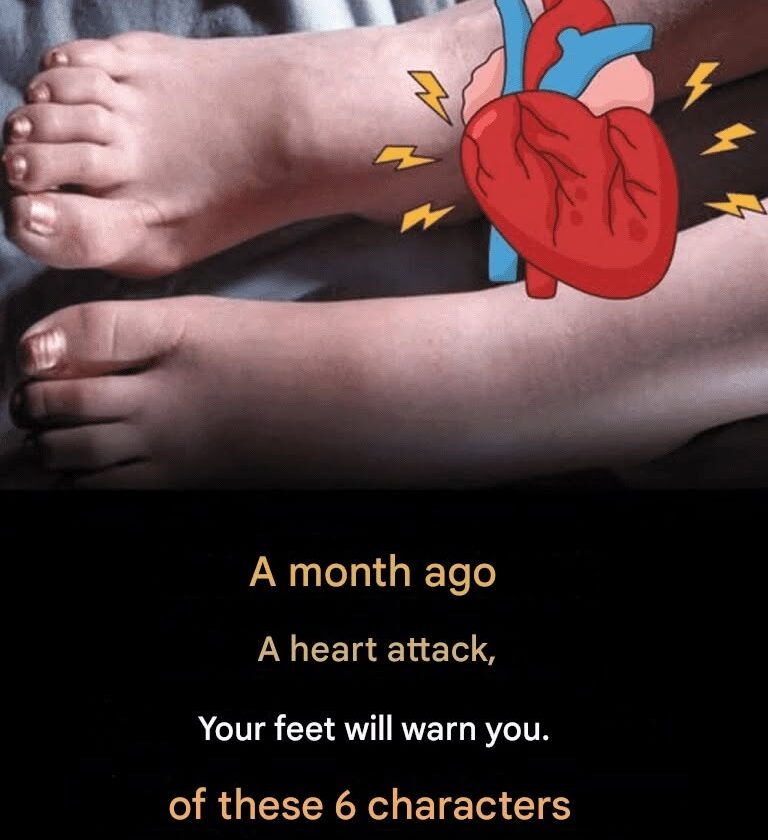
That headline is overstated. There isn’t a reliable “6-foot-signs-a-month-before-a-heart-attack” checklist that doctors use. However, circulation problems in the feet and legs can sometimes reflect underlying heart or blood vessel disease, which may increase heart attack risk over time.
A heart attack usually happens suddenly, but people at risk often already have cardiovascular disease building for months or years.
Here are foot and leg symptoms that can be linked to poor circulation or heart disease risk:
Possible warning signs in feet/legs
1. Swelling in the feet or ankles
Could suggest fluid retention from heart strain or other conditions like kidney disease.
2. Cold feet or legs
May indicate reduced blood flow due to narrowed arteries.
3. Pain in calves when walking (claudication)
A sign of peripheral artery disease, which is strongly linked to heart disease.
4. Slow-healing cuts or sores on feet
Poor circulation can delay healing, especially in people with diabetes.
5. Skin color changes
Pale, bluish, or darkened skin may suggest reduced oxygen or blood flow.
6. Numbness or tingling
Can be related to nerve damage (often from diabetes) or poor circulation.
Important clarification
These symptoms do not mean a heart attack is coming in a month. They may indicate:
- Peripheral Artery Disease
- Diabetes-related circulation issues
- Chronic heart or kidney problems
Real heart attack warning signs (urgent)
Seek emergency help if you have:
- Chest pressure or pain
- Pain spreading to arm, jaw, or back
- Shortness of breath
- Sudden sweating, nausea, or dizziness
Bottom line
Foot symptoms can be a signal of long-term cardiovascular risk, not a precise countdown to a heart attack.
If you want, I can break down early heart attack symptoms in men vs women, because they can look quite different and are often missed.