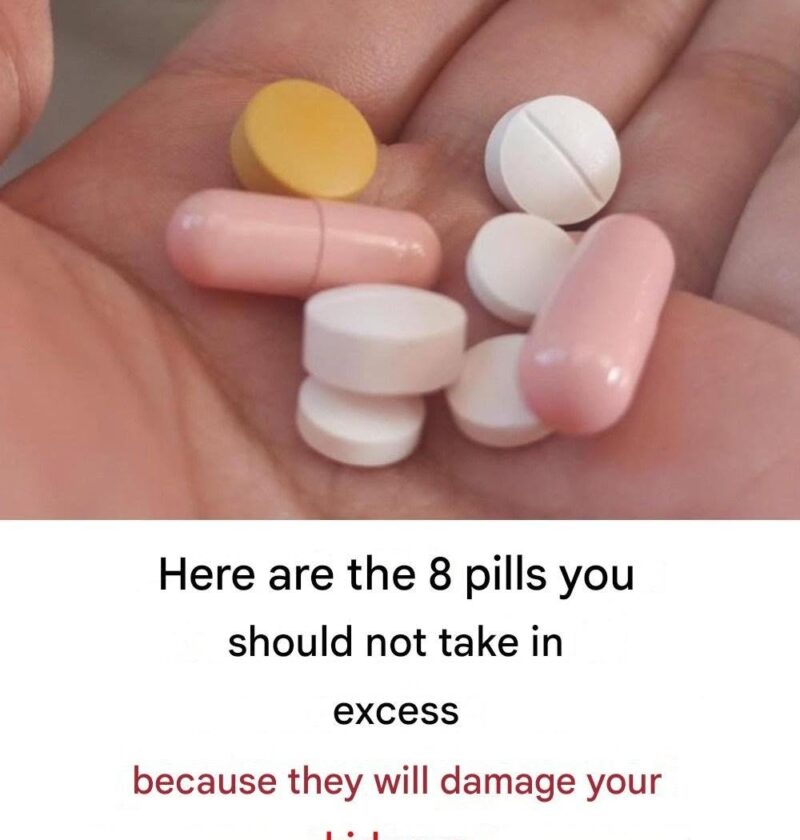
The claim “Eight pills you shouldn’t take because they damage your kidneys” is misleading. Many medications can affect the kidneys under certain circumstances, but they are often safe and beneficial when taken as directed and monitored appropriately. The risk depends on factors such as the dose, duration, existing kidney disease, age, dehydration, and interactions with other medicines.
Some medications that can increase the risk of kidney problems include:
- NSAID pain relievers
- Examples: ibuprofen, naproxen.
- Risk increases with frequent use, high doses, dehydration, heart failure, or existing kidney disease.
- Certain antibiotics
- Some antibiotics can affect the kidneys, particularly in higher doses or in people with reduced kidney function. Doses often need adjustment.
- Some antiviral medications
- Certain antivirals can affect kidney function and may require monitoring.
- Some diuretics (“water pills”)
- Can contribute to dehydration or electrolyte imbalances, which may affect the kidneys.
- ACE inhibitors and ARBs
- These blood pressure medicines can cause a small change in kidney function when started, but they also protect the kidneys in many people with diabetes or kidney disease. They should not be stopped without medical advice.
- Lithium
- Long-term use can affect kidney function in some people and usually requires regular blood tests.
- Certain chemotherapy drugs
- Some cancer treatments can be harmful to the kidneys and are closely monitored.
- Some contrast dyes used for imaging tests
- These are not pills, but they can affect kidney function in susceptible individuals.
How to reduce your risk
- Take medications exactly as prescribed.
- Stay hydrated unless your healthcare provider has advised otherwise.
- Tell your healthcare provider about all medicines and supplements you take.
- Have your kidney function monitored if you’re taking medications that can affect the kidneys or if you already have kidney disease.
If you have kidney disease, diabetes, or high blood pressure, or you’re taking a specific medication you’re concerned about, I can provide more tailored information.