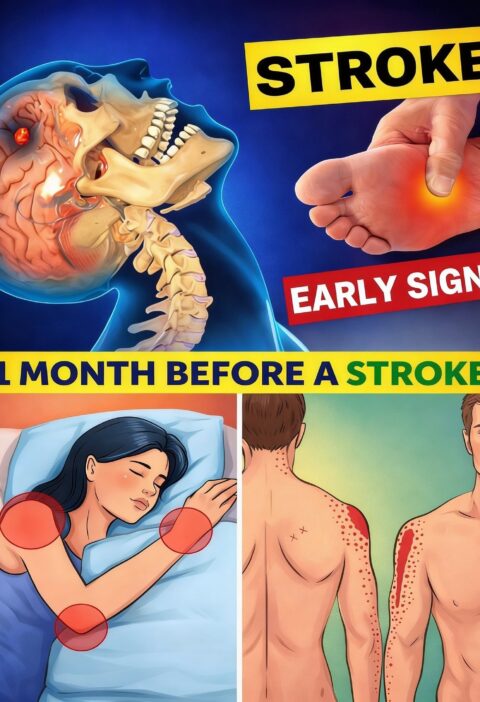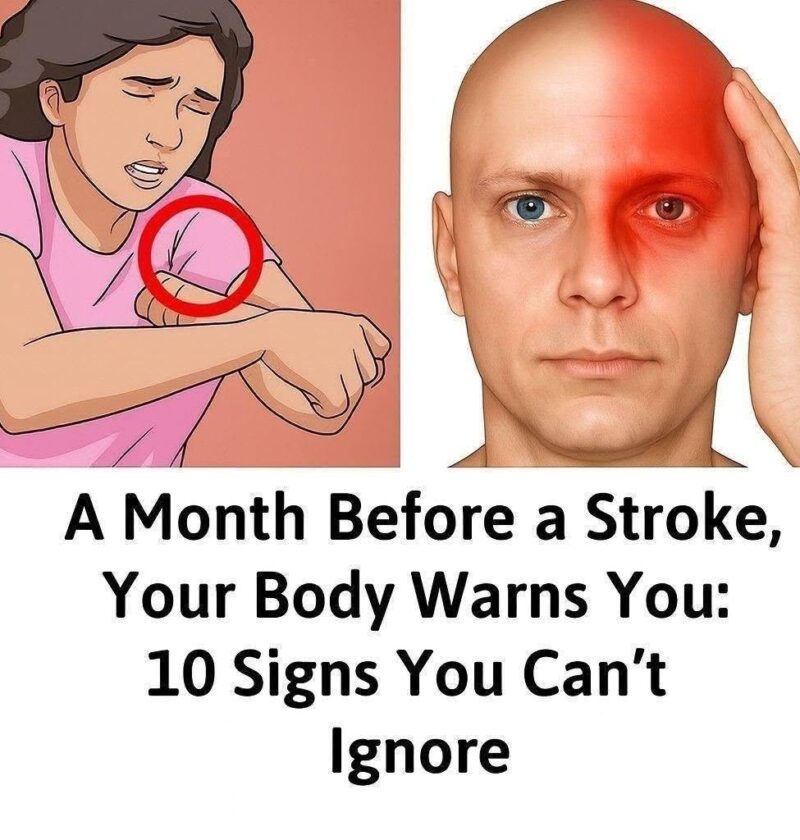
A Month Before a Stroke, Your Body May Warn You: 10 Signs Not to Ignore
A stroke usually happens suddenly, and there is no reliable way to predict that a stroke will occur exactly “one month before.” However, some people experience warning signs, especially from a transient ischemic attack (TIA), sometimes called a “mini-stroke.” A TIA can be a serious warning that a major stroke may follow.
10 Possible Warning Signs to Take Seriously
1. Sudden weakness or numbness
- Weakness, tingling, or numbness in the face, arm, or leg
- Especially if it affects one side of the body
2. Sudden trouble speaking
- Slurred speech
- Difficulty finding words
- Trouble understanding others
3. Sudden vision changes
- Blurred vision
- Double vision
- Loss of vision in one eye or both eyes
4. Sudden dizziness or loss of balance
- Feeling unsteady
- Trouble walking
- Loss of coordination
5. Sudden severe headache
A sudden, intense headache unlike usual—especially with other symptoms—requires urgent attention.
6. Temporary episodes that disappear
Symptoms that last minutes and then go away can still be a TIA and should not be ignored.
7. Confusion or difficulty thinking clearly
Sudden confusion, trouble understanding situations, or difficulty performing familiar tasks can be concerning.
8. Trouble swallowing
New difficulty swallowing or a change in speech may indicate neurological problems.
9. Unusual fatigue or weakness
Persistent unexplained weakness can have many causes, but new or significant changes should be evaluated.
10. Heart-related warning signs
Conditions such as irregular heartbeat (especially atrial fibrillation), chest symptoms, or unexplained shortness of breath can increase stroke risk.
Remember FAST
- F — Face: Is one side drooping?
- A — Arms: Can both arms be raised?
- S — Speech: Is speech unclear?
- T — Time: Call emergency services immediately.
The most important point: do not wait for symptoms to pass. Even if signs disappear, urgent medical evaluation can help prevent a larger stroke.
If you or someone you know has had episodes of numbness, weakness, dizziness, or speech trouble, the details matter—especially age, duration of symptoms, and whether it affected one side of the body.