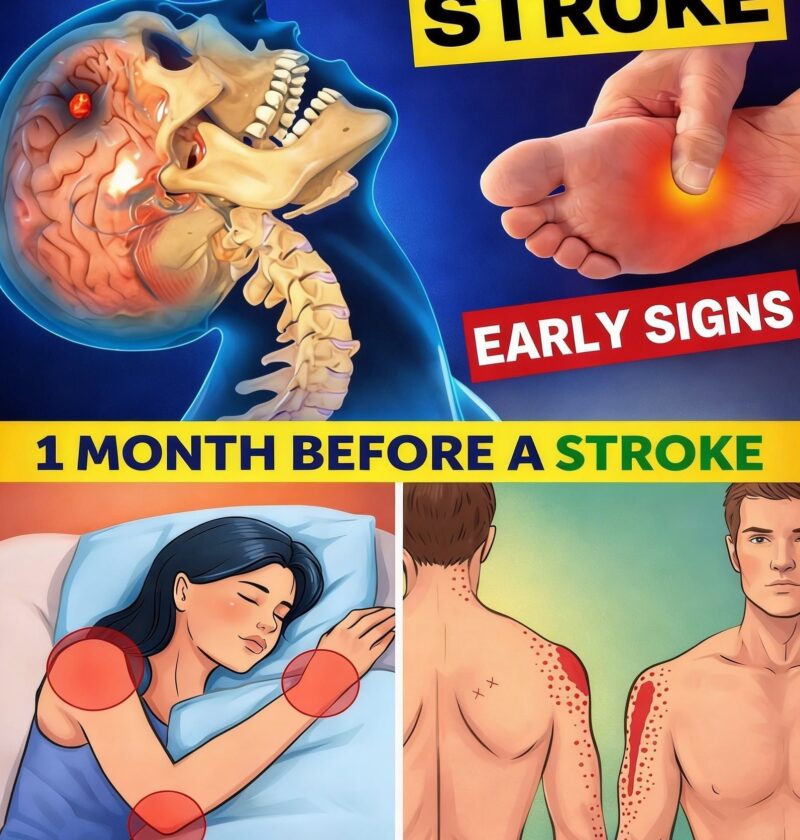
First: there are no reliable “1 month before stroke” warning signsA stroke usually happens suddenly, not gradually over weeks. However, some people may experience a warning event called a Transient Ischemic Attack, which can occur hours, days, or sometimes weeks before a full stroke.
A TIA causes temporary stroke-like symptoms that go away—but it is a medical emergency warning sign, not a “slow buildup symptom list.”
🚨 Real stroke warning signs (FAST + others)
These can happen suddenly, not over a month:
- Face drooping
- Arm weakness
- Speech difficulty
- Sudden confusion
- Sudden vision loss (one or both eyes)
- Sudden dizziness or loss of balance
- Sudden severe headache (no clear cause)
⚠️ Why “1-month early warning lists” are misleading
Viral posts often include vague symptoms like:
- fatigue
- mild headaches
- tingling
- dizziness
These are non-specific and can come from many harmless conditions like stress, blood pressure changes, dehydration, or sleep issues—not necessarily stroke risk.
🛡️ 9 real ways to reduce stroke risk (evidence-based)
- Control high blood pressure
- Manage diabetes properly
- Stop smoking
- Keep cholesterol in check
- Exercise regularly (even walking helps)
- Maintain healthy weight
- Limit alcohol intake
- Eat a balanced diet (less salt, processed food)
- Treat heart rhythm problems like atrial fibrillation
⏱️ Key takeaway
- Stroke = usually sudden
- No dependable “one month warning checklist” exists
- TIA symptoms or sudden neurological changes = urgent emergency
If you want, I can also give you a simple stroke risk checklist for older adults or explain how to quickly tell the difference between stroke, dizziness, and low blood pressure.