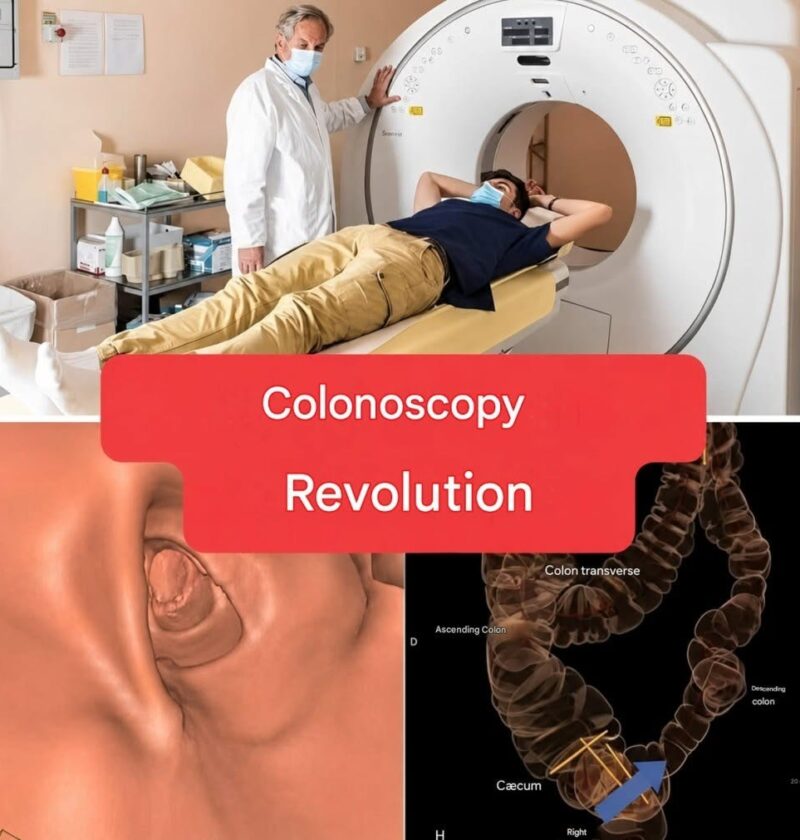
New Methods May Make Colon Screening Less Invasive: What You Should Know
The idea that “colonoscopy will no longer be an invasive examination” refers to ongoing advances in colorectal cancer screening. While traditional colonoscopy is still widely used and remains one of the most effective ways to examine the colon, researchers continue to develop and improve less invasive alternatives.
Why Colonoscopy Is Done
A colonoscopy allows doctors to:
- Examine the inside lining of the colon
- Find abnormal growths (polyps)
- Remove some polyps during the same procedure
- Detect colorectal cancer at an early stage
Because it involves inserting a flexible camera through the rectum, it is considered an invasive procedure, although it is generally safe when performed by trained professionals.
Newer and Less Invasive Screening Approaches
1. Stool-Based Tests
These tests look for signs of cancer or precancerous changes in a stool sample.
Examples include:
- Fecal immunochemical tests (FIT) — detect hidden blood in stool
- Stool DNA tests — look for certain genetic changes linked to colorectal cancer
Advantages:
✅ No procedure
✅ Can be done at home
✅ No bowel preparation in many cases
Limitations:
- If a result is abnormal, a colonoscopy is usually still needed.
2. CT Colonography (“Virtual Colonoscopy”)
This imaging test uses a CT scan to create pictures of the colon.
Advantages:
- No camera inserted into the colon
- Less invasive than traditional colonoscopy
Limitations:
- Still usually requires bowel preparation
- Cannot remove polyps during the test
3. Advanced Imaging and Future Technologies
Researchers are studying methods such as:
- Improved imaging techniques
- Artificial intelligence-assisted detection
- Capsule-based systems that use a small camera swallowed by the patient
These technologies aim to make screening more comfortable and accessible.