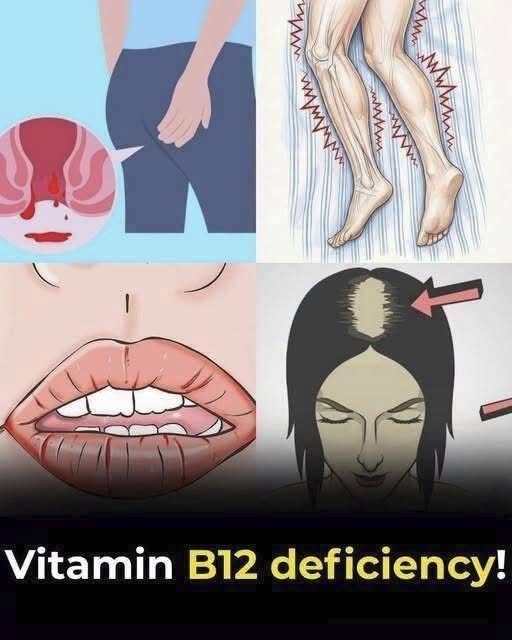
8 Strange Signs Your Body May Be Low in Vitamin B12
Vitamin B12 is an essential nutrient needed for healthy nerves, red blood cell production, DNA formation, and normal brain function. A deficiency can develop slowly, and some symptoms may be easy to overlook—especially in older adults.
Here are 8 possible signs of low vitamin B12 levels:
1. Tingling or Numbness in Hands and Feet
B12 helps maintain healthy nerves. A deficiency may cause:
- Pins and needles
- Burning sensations
- Reduced feeling in the hands or feet
2. Unusual Tiredness and Weakness
Low B12 can contribute to anemia, which may lead to:
- Fatigue
- Low energy
- Feeling weak even after adequate rest
3. Balance Problems
Nerve changes caused by B12 deficiency may affect coordination and stability, increasing the risk of falls.
4. Memory or Concentration Difficulties
Some people with low B12 report:
- Trouble focusing
- Forgetfulness
- Mental “fog”
These symptoms can have many causes, so testing is important.
5. Mood Changes
B12 plays a role in brain chemistry. Low levels may be associated with:
- Low mood
- Irritability
- Changes in emotional well-being
6. Pale Skin or a Sore Tongue
B12 deficiency can affect red blood cell production and may cause:
- Pale appearance
- A smooth, sore, or swollen tongue
7. Vision Changes
Rarely, severe B12 deficiency can affect the optic nerve and contribute to vision problems.
8. Shortness of Breath or Dizziness
If B12 deficiency causes anemia, the body may struggle to carry enough oxygen, leading to:
- Breathlessness with activity
- Lightheadedness
- Fast heartbeat
Who Is More Likely to Have Low B12?
Risk may be higher for:
- Adults over 60
- People with reduced stomach acid
- Those taking long-term acid-reducing medicines
- People taking metformin
- People with certain digestive conditions
- Those following a strict vegan diet without B12 supplementation
How to Check Your B12 Level
A healthcare professional can assess B12 status with blood tests. Treatment depends on the cause and may involve dietary changes or supplements.
Important: These symptoms are not always caused by B12 deficiency. Similar signs can occur with many other conditions, so proper evaluation is important before starting high-dose supplements.