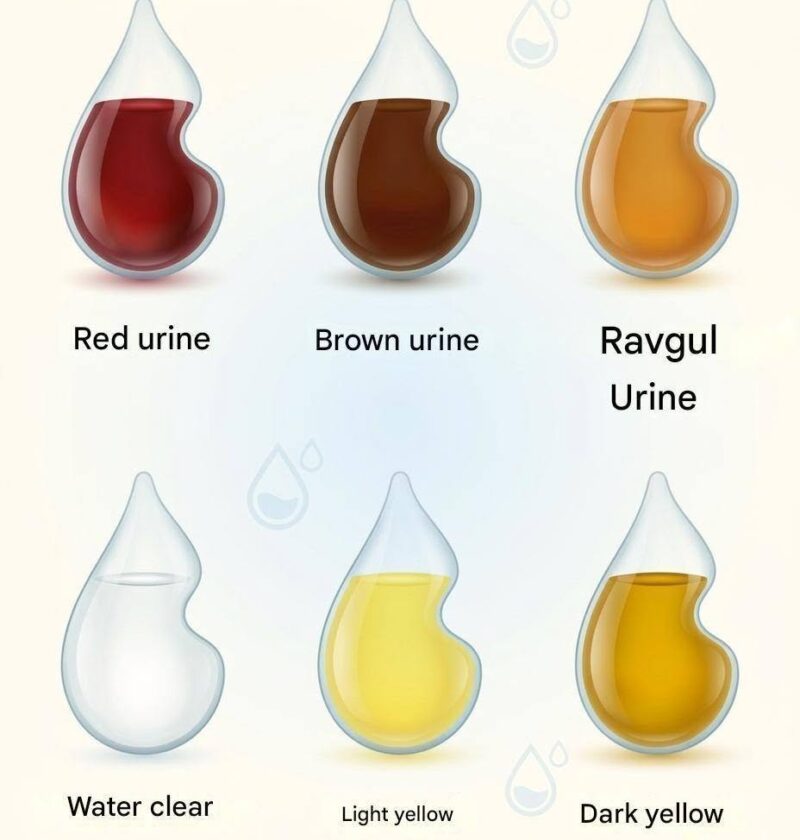
What Does the Color of Your Urine Say About Your Health?
Your urine color can provide clues about your hydration level and sometimes signal changes in your health. While color alone cannot diagnose a condition, noticing persistent changes can be useful information.
🟨 Pale Yellow — Usually Healthy
A light yellow color often indicates good hydration. This is commonly considered a normal urine color.
🟡 Dark Yellow or Amber — You May Need More Fluids
Darker yellow urine often means your urine is more concentrated, which can happen when you:
- Drink less water
- Sweat heavily
- Exercise intensely
- Lose fluids through illness
Drinking more water often returns urine to a lighter shade.
🟤 Brown or Tea-Colored — May Need Attention
Brown urine can be caused by:
- Severe dehydration
- Certain medications or supplements
- Muscle breakdown in rare cases
- Liver or bile-related problems
Persistent brown urine should be checked by a healthcare professional.
🩷 Pink or Red — Could Be Blood or Other Causes
Red or pink urine may occur due to:
- Blood in the urine
- Urinary tract infections
- Kidney stones
- Certain foods (such as beets)
- Some medications
Blood in urine should generally be evaluated, especially if it is unexplained.
🟠 Orange — Possible Causes
Orange urine may be related to:
- Dehydration
- Certain medications
- Liver or bile duct issues
🟢 Blue or Green — Uncommon
This may occur from:
- Certain medications or dyes
- Food coloring
- Rare infections
⚪ Cloudy or Milky — May Indicate an Issue
Cloudy urine can be associated with:
- Dehydration
- Urinary tract infections
- Kidney stones
- Certain mineral buildup
🟣 Purple — Very Rare
Purple urine is uncommon and may occur in specific medical situations, usually involving hospitalized patients or certain infections.