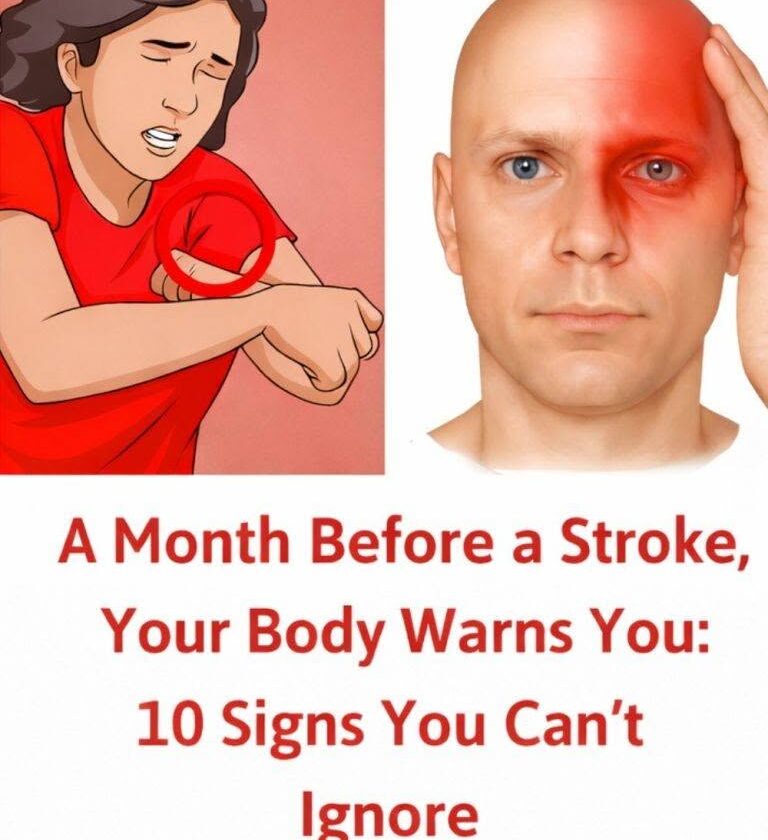
A Month Before a Stroke? 10 Warning Signs You Should Never Ignore
The claim that your body always warns you a month before a stroke is misleading. Some people experience warning signs before a stroke, especially if they have a transient ischaemic attack (TIA), sometimes called a “mini-stroke.” However, many strokes happen suddenly with no warning at all.
Recognising possible warning signs and seeking prompt medical care can make a critical difference.
1. Sudden Weakness or Numbness
Weakness or numbness affecting the:
- Face
- Arm
- Leg
especially on one side of the body, is one of the most common stroke symptoms.
2. Difficulty Speaking
Watch for:
- Slurred speech
- Trouble finding words
- Difficulty understanding others
- Confusion during conversation
3. Facial Drooping
One side of the face may droop or feel numb.
A simple check is to smile—if one side doesn’t move normally, seek emergency help.
4. Sudden Vision Problems
A stroke can cause:
- Blurred vision
- Double vision
- Partial or complete vision loss in one or both eyes
5. Loss of Balance or Coordination
You may suddenly have:
- Trouble walking
- Dizziness
- Loss of coordination
- Unsteadiness
6. Severe, Sudden Headache
A sudden, intense headache with no obvious cause—especially if accompanied by other neurological symptoms—can be a sign of a stroke, particularly a bleeding stroke.
7. A Transient Ischaemic Attack (TIA)
A TIA causes stroke-like symptoms that usually resolve within minutes or hours.
Symptoms may include:
- Temporary weakness
- Speech problems
- Vision changes
- Numbness
Even if symptoms disappear, a TIA is a medical emergency because it can be a warning that a full stroke may follow.
8. Sudden Confusion
Difficulty thinking clearly, understanding language, or responding appropriately can indicate a problem with blood flow to the brain.
9. Difficulty Swallowing
Some people develop sudden trouble swallowing due to weakness in the muscles involved.
10. Sudden Unexplained Fatigue or Other Symptoms
Some people report unusual tiredness or feeling unwell before a stroke, but these symptoms are non-specific and are not reliable predictors. They can occur with many other conditions.
Remember the FAST Test
If you think someone may be having a stroke, remember FAST:
- F – Face: Does one side of the face droop?
- A – Arms: Can they raise both arms, or does one drift downward?
- S – Speech: Is their speech slurred or difficult to understand?
- T – Time: Call your local emergency services immediately. Prompt treatment can reduce brain damage and improve recovery.
Who Is at Higher Risk?
Risk factors include:
- High blood pressure
- Diabetes
- High cholesterol
- Smoking
- Atrial fibrillation
- Obesity
- Physical inactivity
- Older age
- Previous stroke or TIA
Managing these conditions can significantly reduce stroke risk.