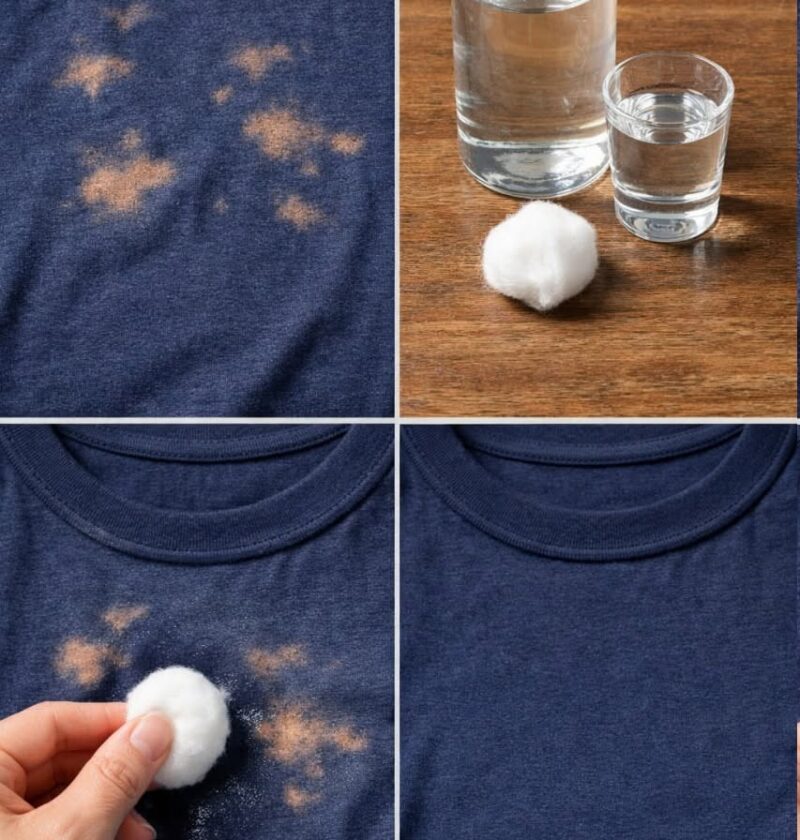
That kind of headline is again clickbait—it suggests there’s a simple “solution” to reverse bleach damage, but the reality is more limited.
🧪 What bleach actually does
Household bleach (sodium hypochlorite) doesn’t just stain clothes—it removes the dye permanently by breaking chemical bonds. So a “stain” is actually color loss, not something sitting on the fabric.
That’s why:
- It cannot truly be washed out
- It usually cannot be restored to the original color
👕 What you can do (real solutions)
1. 🎨 Fabric dye (best real fix)
The most reliable option is re-coloring the fabric.
- Use fabric dye that matches or completely changes the color
- Works best on cotton, denim, linen
- Example products: Rit dye-type products
👉 This is the closest thing to a true “repair”
2. 🖌️ Fabric paint or markers (small spots)
Good for:
- Small bleach dots
- Minor splashes
You can:
- Blend color into the surrounding area
- Turn stains into designs or patterns
3. ✂️ Creative fixes (surprisingly popular)
People often transform bleach stains into style:
- Tie-dye pattern
- Patchwork design
- Embroidery over the spot
- Iron-on patches
4. 🧼 Lightening the rest of the garment (camouflage method)
Instead of fixing the spot:
- Lighten the entire clothing item slightly (controlled bleaching)
- Or overdye it darker
This helps the bleach spot “disappear” visually.
❌ What does NOT work
Be cautious of viral “solutions” claiming to fix bleach stains:
- ❌ Vinegar or baking soda (cannot restore color)
- ❌ Lemon juice (can worsen damage)
- ❌ Detergents (no effect on dye loss)
- ❌ Magic sprays or home chemical mixes
These do not reverse bleaching.