Urine color can give quick, rough clues about hydration and sometimes health changes—but it’s not a standalone diagnostic tool. Here’s a practical guide:
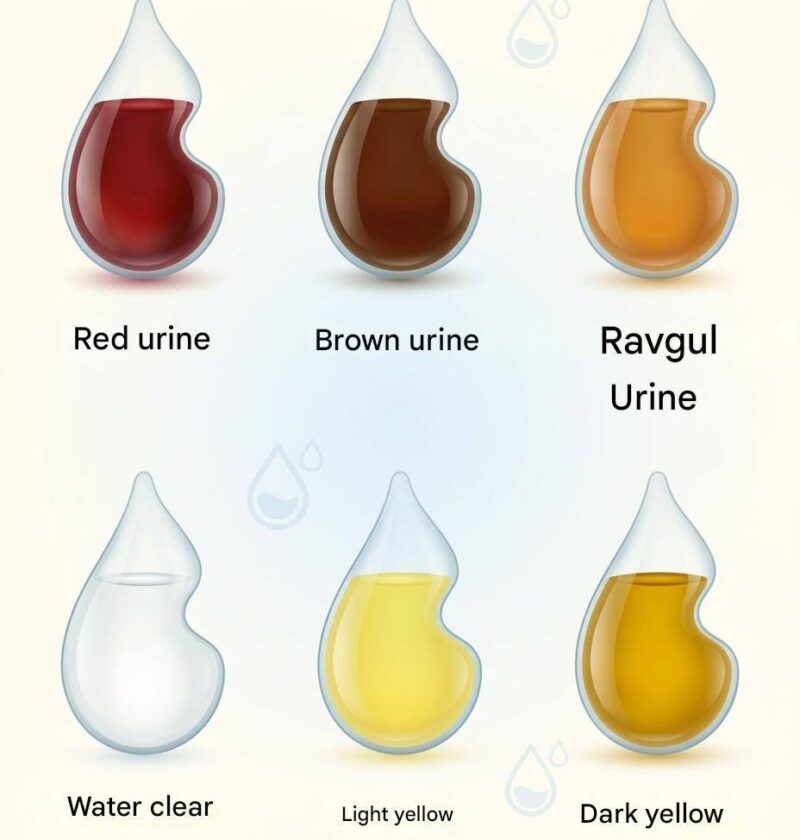
💧 Clear to very light yellow
Usually normal.
- Well hydrated
- Sometimes overhydration if it’s consistently completely clear
🍋 Pale straw to light yellow (ideal)
Best “healthy range”
- Proper hydration
- Normal kidney function in most cases
🌕 Dark yellow / amber
Common warning sign
- Mild to moderate dehydration
- You likely need more fluids
🧡 Honey or brownish-yellow
More significant dehydration or possible issue
- Dehydration is common cause
- Can also be from certain vitamins (especially B-complex) or medications
🥤 Orange
Can be benign or medical-related
- Dehydration
- Some medications (like certain antibiotics or laxatives)
- Rarely liver or bile duct issues (especially if paired with yellowing eyes/skin)
🩷 Pink or red
Needs attention if not explained
- Foods (beets, berries) can cause harmless color change
- Possible blood in urine (infection, stones, kidney issues)
- If unexplained or persistent, it should be checked
🟤 Cola / dark brown
More concerning if persistent
- Severe dehydration
- Liver problems (bilirubin in urine)
- Muscle breakdown (rare but serious)
- Requires medical evaluation if not clearly diet-related
🟢 Blue or green (rare)
- Food dyes or medications
- Rare genetic or bacterial causes
🚩 When to be more concerned
Seek medical advice if urine color change comes with:
- Pain or burning while urinating
- Fever or back pain
- Blood (red/pink) without dietary cause
- Persistent dark or abnormal color for more than a day or two
If you want, tell me the exact color you’ve noticed and any symptoms, and I can help interpret it more specifically.