Stroke: Can Warning Signs Appear One Month Before?
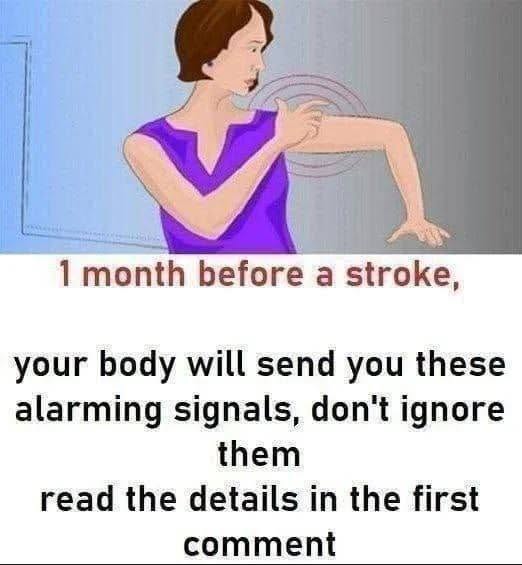
The claim that a stroke always gives warning signs one month before it happens is not accurate. Many strokes occur suddenly without any warning. However, some people experience a transient ischaemic attack (TIA)—often called a “mini-stroke”—days or weeks before a major stroke. A TIA is a medical emergency because it can be an important warning that a stroke may follow.
1. Sudden Weakness or Numbness
A common warning sign is sudden weakness or numbness affecting the:
- Face
- Arm
- Leg
It usually occurs on one side of the body.
2. Difficulty Speaking
Watch for:
- Slurred speech
- Trouble finding words
- Difficulty understanding others
- Sudden confusion
Even if these symptoms last only a few minutes, they should be evaluated immediately.
3. Facial Drooping
One side of the face may droop or feel numb.
A simple test is to smile. If one side of the face does not move normally, seek emergency medical help.
4. Sudden Vision Changes
A stroke or TIA may cause:
- Blurred vision
- Double vision
- Partial or complete loss of vision in one or both eyes
5. Loss of Balance or Coordination
You may suddenly experience:
- Dizziness
- Trouble walking
- Loss of balance
- Poor coordination
6. Sudden Severe Headache
A sudden, intense headache with no obvious cause—especially if it occurs with other neurological symptoms—may be a sign of a stroke, particularly a bleeding stroke.
7. A Transient Ischaemic Attack (TIA)
A TIA causes temporary stroke-like symptoms that usually resolve within minutes or hours.
Symptoms may include:
- Temporary weakness
- Numbness
- Speech problems
- Vision changes
Never ignore a TIA, even if you feel completely normal afterward. Early treatment can help prevent a future stroke.
8. Sudden Confusion
Difficulty thinking clearly, understanding conversations, or responding appropriately can indicate reduced blood flow to the brain.
9. Difficulty Swallowing
Some people develop sudden problems swallowing because the muscles involved are affected.
10. Unexplained Neurological Symptoms
Any sudden change in movement, sensation, speech, vision, or coordination should be treated as a potential medical emergency, even if it improves quickly.
Remember the FAST Test
If you suspect someone is having a stroke, remember FAST:
- F – Face: Ask them to smile. Does one side droop?
- A – Arms: Ask them to raise both arms. Does one arm drift downward?
- S – Speech: Is their speech slurred or difficult to understand?
- T – Time: Call your local emergency services immediately. Fast treatment can reduce brain damage and improve recovery.
Who Is at Higher Risk?
Risk factors include:
- High blood pressure
- Diabetes
- High cholesterol
- Smoking
- Atrial fibrillation (an irregular heartbeat)
- Obesity
- Physical inactivity
- Older age
- Previous stroke or TIA
Managing these conditions can significantly lower stroke risk.