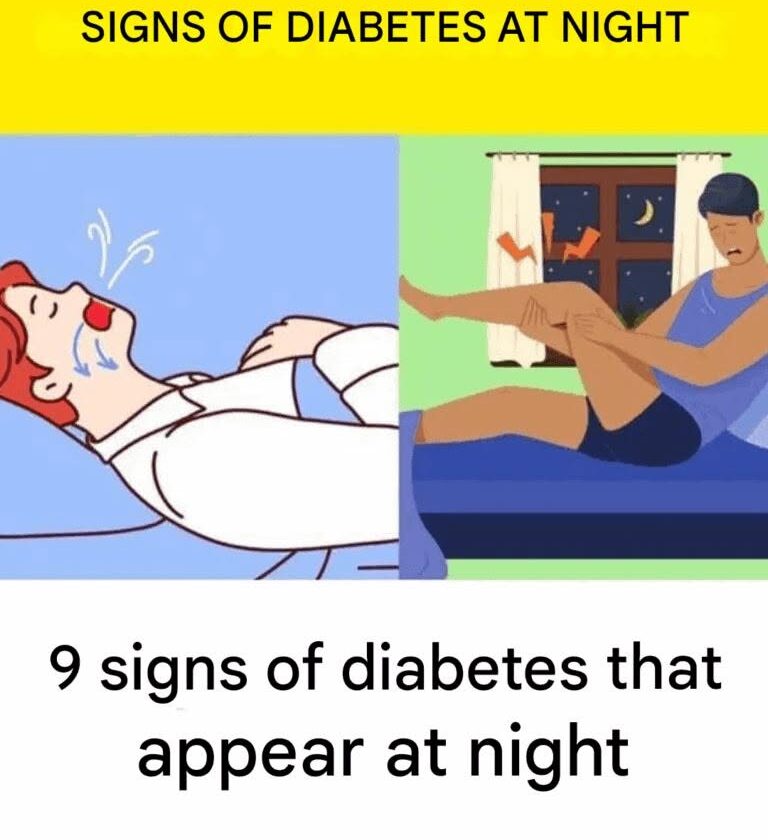
Diabetes can cause symptoms that become more noticeable at night, but none of these signs alone confirms diabetes. If you have several of them—especially along with increased thirst, frequent urination, or unexplained weight loss—it’s a good idea to get tested.
Here are nine symptoms that may occur at night:
- Frequent nighttime urination (nocturia)
High blood sugar causes the kidneys to produce more urine, leading to repeated trips to the bathroom. - Excessive thirst
Losing more fluid through urination can make you wake up feeling very thirsty. - Night sweats
Low blood sugar during sleep (more common in people taking insulin or certain diabetes medications) can cause sweating. - Restless sleep
Blood sugar fluctuations can interfere with sleep quality. - Leg cramps or restless legs
Some people with diabetes experience muscle cramps or discomfort in the legs, although these symptoms have many possible causes. - Numbness, tingling, or burning in the feet
Diabetic nerve damage (neuropathy) often feels more noticeable at night when there are fewer distractions. - Dry mouth
Dehydration from increased urination can cause a dry mouth during the night. - Loud snoring or pauses in breathing
Obstructive sleep apnea is more common in people with type 2 diabetes and can contribute to poor sleep. - Blurry vision upon waking
High blood sugar can temporarily affect the eye’s lens, causing vision changes that may be noticed in the morning.