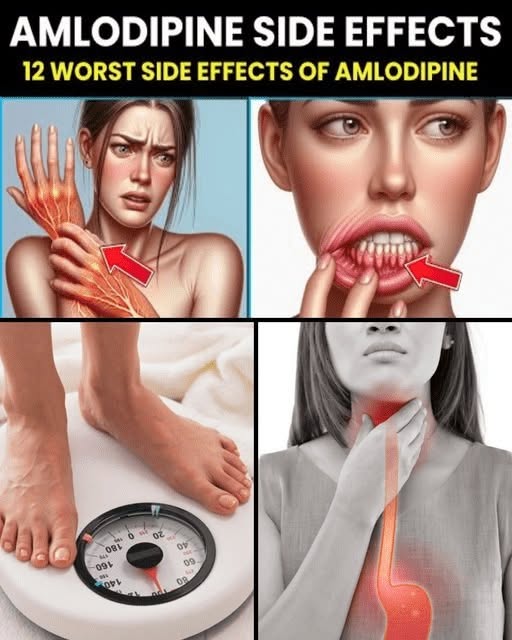
12 Worst Side Effects of Amlodipine You Should NEVER Ignore
Amlodipine is a commonly prescribed calcium channel blocker used to treat high blood pressure (hypertension) and chest pain (angina). Many people take it safely, but like all medicines, it can cause side effects. Most are mild, but some symptoms should not be ignored.
1. Swelling of the Ankles, Feet, or Legs (Edema)
One of the most common side effects of amlodipine.
You may notice:
- Puffy ankles
- Tight shoes
- Leg swelling that worsens later in the day
This happens because amlodipine relaxes blood vessels, which can allow fluid to collect in tissues.
Call your healthcare provider if: swelling is severe, sudden, or associated with shortness of breath.
2. Severe Dizziness or Fainting
Amlodipine lowers blood pressure, and some people may experience:
- Lightheadedness
- Feeling faint
- Loss of balance
Seek medical advice if: dizziness is severe, persistent, or causes falls.
3. Very Low Blood Pressure
Signs may include:
- Weakness
- Confusion
- Blurred vision
- Feeling like you might pass out
This is more likely if amlodipine is combined with other blood pressure medicines.
4. Fast or Irregular Heartbeat (Palpitations)
Some people feel:
- Racing heartbeat
- Fluttering sensations
- Skipped beats
Contact your healthcare provider if palpitations are new, frequent, or accompanied by chest pain or dizziness.
5. Worsening Chest Pain
Rarely, when starting amlodipine or increasing the dose, some people may experience worsening angina symptoms.
Seek urgent medical care for:
- Severe chest pain
- Chest pressure lasting several minutes
- Pain spreading to the arm, jaw, or back
6. Shortness of Breath
Breathing problems are uncommon but can be serious, especially if they occur with:
- Leg swelling
- Rapid weight gain
- Chest discomfort
7. Severe Fatigue or Weakness
Some people feel unusually tired after starting treatment.
If fatigue is extreme or affects daily activities, discuss it with your healthcare provider.
8. Severe Headache
Headaches can occur because blood vessels are relaxing. They often improve as the body adjusts.
Seek advice if headaches are:
- Sudden and severe
- Different from usual
- Associated with neurological symptoms
9. Allergic Reaction
Rare but potentially serious signs include:
- Rash or hives
- Swelling of the face, lips, tongue, or throat
- Trouble breathing
Seek emergency care immediately if these occur.
10. Stomach Problems
Possible effects include:
- Nausea
- Abdominal discomfort
- Constipation
- Changes in bowel habits
Persistent or severe symptoms should be discussed with a healthcare professional.
11. Gum Overgrowth (Gingival Hyperplasia)
A small number of people may develop:
- Swollen gums
- Tender gums
- Changes in gum appearance
Good dental hygiene and regular dental checkups are important.
12. Flushing or Feeling Warm
Amlodipine can cause blood vessels to widen, leading to:
- Facial flushing
- Warm sensations
- Redness of the skin
This is usually not dangerous but can be bothersome.