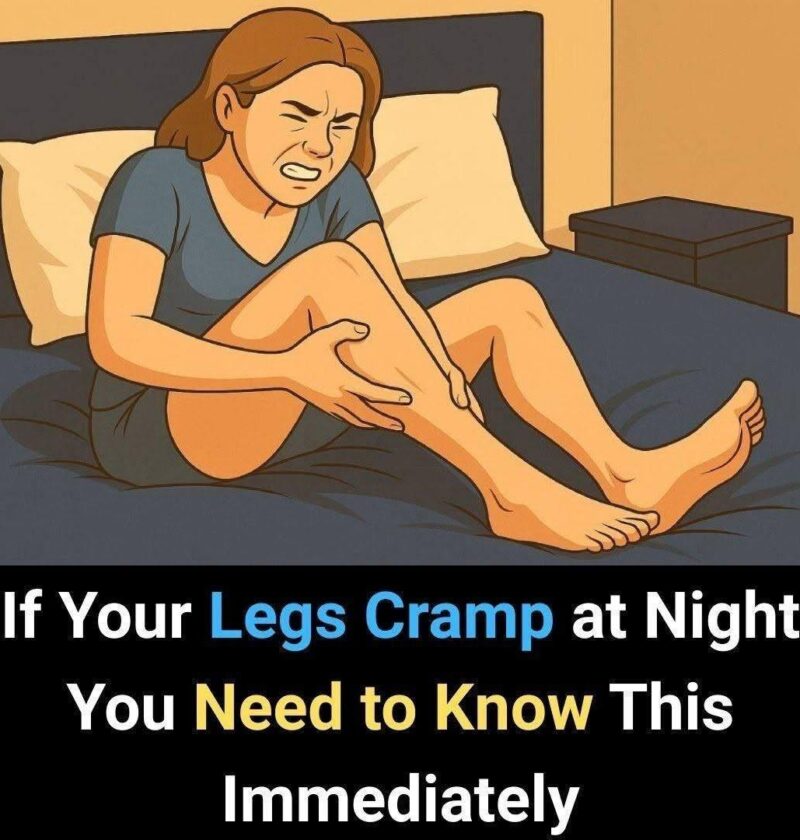
If Your Legs Cramp at Night, Here’s What You Should Know
Nighttime leg cramps are common, especially as people get older, but they can be uncomfortable and disruptive. They are sudden, painful muscle contractions—often in the calf, foot, or thigh—that may last from a few seconds to several minutes.
While many online claims suggest there is one hidden cause or instant cure, nighttime cramps can have many possible triggers.
Common Reasons Legs May Cramp at Night
1. Muscle fatigue or overuse
Long periods of standing, walking, or exercise can strain muscles and contribute to cramps later.
2. Dehydration
Not getting enough fluids may affect muscle function, especially in hot weather or after sweating.
3. Mineral imbalances
Low levels of certain nutrients, such as magnesium, potassium, or calcium, can affect muscles—but supplements are not always the answer unless a deficiency is present.
4. Reduced circulation or nerve issues
Some conditions affecting blood flow or nerves can contribute to cramping sensations.
5. Medications
Some medicines, including certain diuretics and cholesterol-lowering drugs, may be associated with muscle cramps in some people.
6. Prolonged sitting or inactivity
Staying in one position for long periods may increase stiffness and discomfort.
What You Can Try During a Cramp
- Gently stretch the affected muscle
- Massage the cramped area
- Stand up and put weight on the leg if safe
- Apply warmth with a heating pad or warm towel
For prevention:
- Stay hydrated
- Stretch calves and legs before bed
- Keep a regular activity routine
- Wear supportive footwear during the day
When to Talk to a Healthcare Professional
Seek medical advice if cramps:
- Are severe or happening frequently
- Wake you regularly from sleep
- Are accompanied by swelling, redness, weakness, or numbness
- Begin after starting a new medication
- Occur with other concerning symptoms
Persistent nighttime leg cramps are worth discussing with a healthcare professional to identify possible causes and the best approach for you.