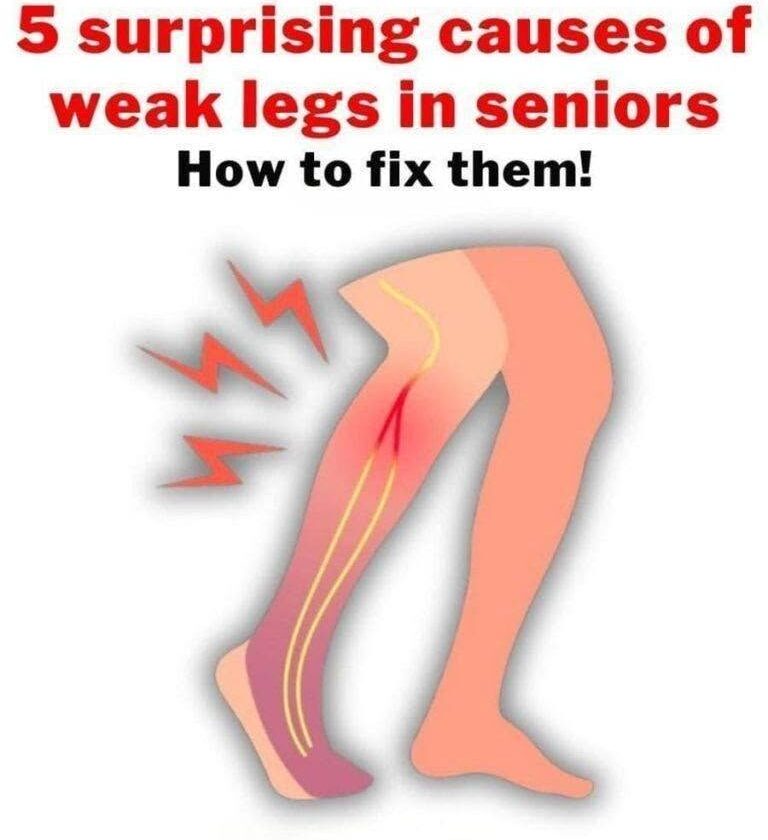
5 Surprising Causes of Weak Legs in Seniors — and How to Improve Them
Weak legs are common with aging, but they are not an unavoidable part of getting older. Leg weakness can come from changes in muscles, nerves, nutrition, medications, or health conditions. Identifying the cause is the first step toward improving strength and mobility.
1. Loss of muscle mass (sarcopenia)
As people age, they can gradually lose muscle size and strength, especially if they are less active.
Possible signs:
- Trouble standing from a chair.
- Difficulty climbing stairs.
- Feeling less steady while walking.
What can help:
- Strength exercises such as chair squats, resistance bands, or supervised weight training.
- Adequate protein intake (based on individual health needs).
- Regular walking and movement.
2. Vitamin B12 deficiency
Low vitamin B12 can affect nerves and may contribute to:
- Weakness.
- Numbness or tingling.
- Balance problems.
What can help:
- Ask a healthcare professional about testing if symptoms suggest deficiency.
- Treat confirmed deficiency with appropriate supplementation or dietary changes.
3. Vitamin D deficiency
Low vitamin D levels may be associated with:
- Reduced muscle function.
- Increased risk of falls.
- Bone health problems.
What can help:
- Safe sunlight exposure.
- Vitamin D-rich foods.
- Supplements when recommended after considering individual needs.
4. Medication side effects
Some medicines may contribute to fatigue, dizziness, or muscle weakness.
Examples can include certain:
- Sedatives.
- Blood pressure medicines.
- Cholesterol-lowering medications.
- Other medications that affect the nervous system.
What can help:
- Review medications regularly with a doctor or pharmacist.
- Do not stop prescribed medicines without medical advice.
5. Nerve, circulation, or medical conditions
Leg weakness can sometimes be related to:
- Peripheral nerve problems.
- Diabetes-related nerve damage.
- Spinal issues.
- Stroke-related changes.
- Poor circulation.
- Thyroid disorders.
What can help:
- Medical evaluation to identify and treat the underlying cause.
- Physical therapy when appropriate