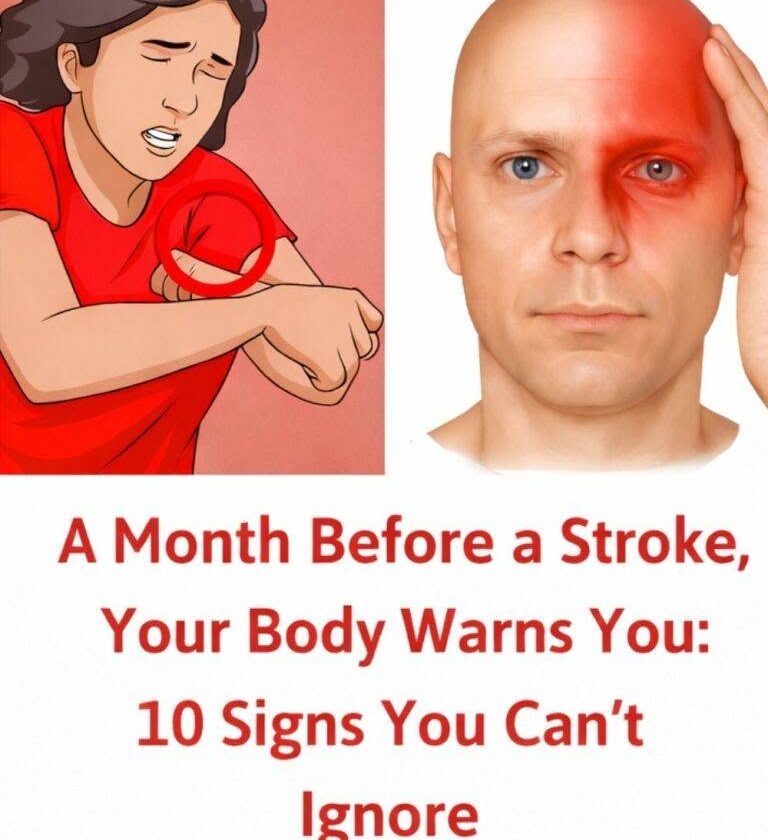
The claim “A month before a stroke, your body warns you: 10 signs not to ignore” is a common health headline, but it should be interpreted carefully. Some people do experience warning symptoms before a stroke, especially related to a transient ischemic attack (TIA, sometimes called a mini-stroke), but many strokes occur suddenly without a month of clear warning signs.
A TIA can be a major warning that a stroke risk is increased and requires urgent medical evaluation.
Possible warning signs that should not be ignored
- Sudden weakness or numbness
- Especially on one side of the face, arm, or leg.
- Speech or language problems
- Slurred speech, difficulty finding words, or trouble understanding others.
- Sudden vision changes
- Blurred vision, double vision, or temporary loss of vision.
- Dizziness or loss of balance
- Trouble walking, coordination problems, or unexplained falls.
- Sudden severe headache
- Especially if it is unusual, intense, or comes with neurological symptoms.
- Temporary episodes of confusion
- Short periods of difficulty thinking clearly or understanding what is happening.
- Face drooping
- One side of the face may feel weak or appear uneven when smiling.
- Brief episodes of symptoms that disappear
- Symptoms that last minutes and then resolve can still be a TIA and should not be dismissed.
- New problems with swallowing
- Difficulty swallowing or a sudden change in swallowing ability.
- Unexplained changes in movement or coordination
- New clumsiness, weakness, or difficulty controlling an arm or leg.
Remember FAST
Use the FAST stroke warning signs:
- F — Face: Does one side droop?
- A — Arms: Is one arm weak or numb?
- S — Speech: Is speech strange or difficult?
- T — Time: Call emergency services immediately.
Important: don’t wait for symptoms to “pass”
Even if symptoms disappear after a few minutes, it may be a TIA. A TIA is a medical emergency because it can signal a higher risk of a major stroke.
Reduce stroke risk
Helpful steps include:
- Control high blood pressure (one of the biggest stroke risk factors).
- Manage diabetes and cholesterol.
- Avoid smoking.
- Stay physically active.
- Take prescribed medications consistently.
- Get evaluated for irregular heart rhythms such as atrial fibrillation if appropriate.