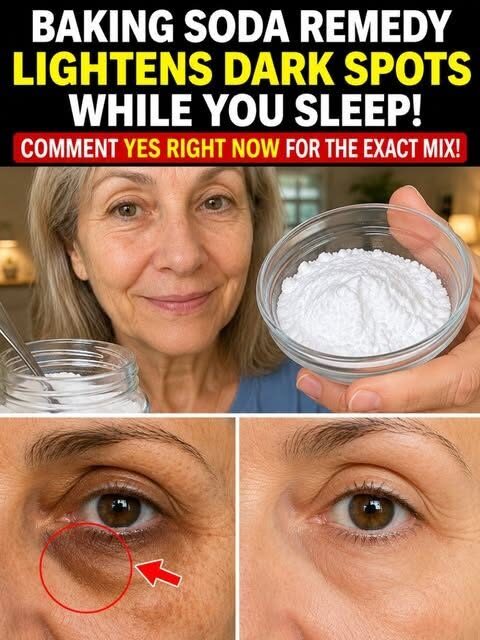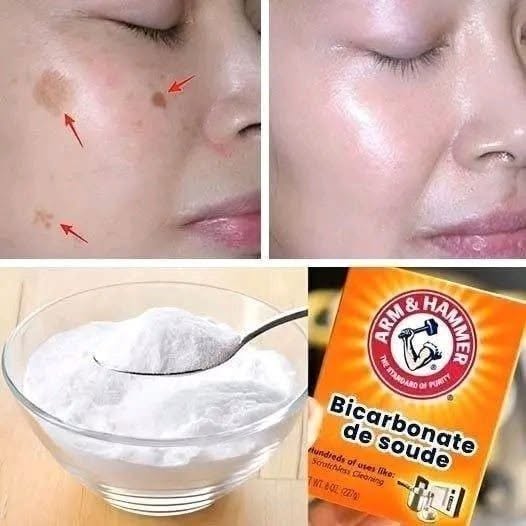
Many online posts claim that baking soda can remove dark spots, wrinkles, and dark circles, but there is no good scientific evidence that it does. In fact, using baking soda on your face can be harmful because it is highly alkaline and can disrupt your skin’s natural protective barrier.
Possible side effects include:
- Skin irritation and redness
- Dryness and peeling
- Worsening of eczema or acne
- Increased sensitivity to the sun, which may make dark spots worse
Better-supported options
For dark spots (hyperpigmentation):
- Daily sunscreen (SPF 30 or higher)
- Niacinamide
- Vitamin C serum
- Azelaic acid
- Retinoids (used as directed)
For wrinkles:
- Daily sunscreen
- Retinoids (such as retinol)
- Moisturizers containing hyaluronic acid or ceramides
- Avoid smoking and excessive sun exposure
For dark circles:
- Get enough sleep and manage allergies if present
- Use sunscreen around the eyes
- Eye creams containing caffeine or niacinamide may help some people
- If dark circles are due to genetics or thinning skin, creams may have only modest effects.
If you still choose to try baking soda
Dermatologists generally do not recommend applying baking soda to the face. If you decide to use it despite the risks:
- Test it on a small area of skin first.
- Do not use it on broken, irritated, or sensitive skin.
- Stop immediately if you experience burning, redness, or a rash.
For persistent dark spots, wrinkles, or dark circles, a dermatologist can help identify the cause and recommend treatments that are more likely to be effective and less likely to damage your skin.