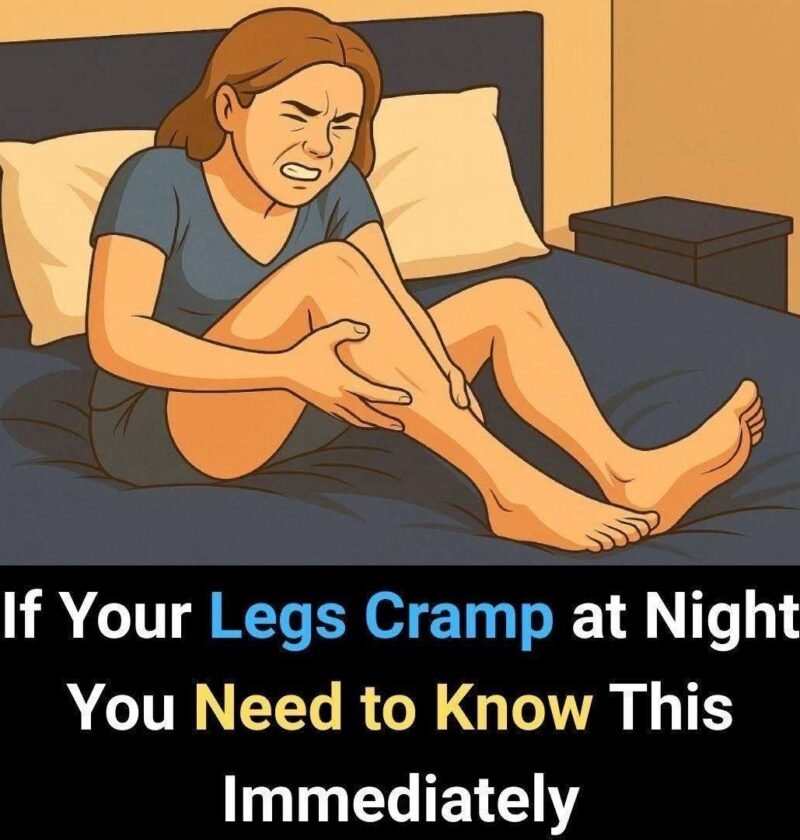
Nighttime leg cramps are common, especially in older adults. They can be painful, but they are usually not a sign of a medical emergency. Claims that you “need to know this immediately” are often exaggerated.
Common causes or contributing factors include:
- Muscle fatigue or overuse
- Dehydration
- Prolonged sitting or standing
- Pregnancy
- Certain medications (such as some diuretics or other drugs in some people)
- Underlying conditions like diabetes, nerve disorders, or poor circulation
What may help:
- Gently stretch the calf muscle before bed.
- Stay well hydrated if you’re dehydrated.
- Regular calf and hamstring stretching can reduce cramps for some people.
- When a cramp occurs, straighten the leg and pull your toes toward your shin, then gently massage the muscle.
- Walking a little or applying warmth may also provide relief.
Regarding magnesium: despite many online claims, research shows magnesium does not consistently prevent nighttime leg cramps for most people, although it may help in specific situations (such as some people during pregnancy). It’s best not to start supplements without discussing them with your healthcare provider, especially if you have kidney disease or take medications that can interact.
You should arrange a medical evaluation if:
- Cramps happen frequently or are becoming more severe.
- You have muscle weakness, numbness, or persistent pain between cramps.
- One leg becomes swollen, red, or warm.
- Cramps began soon after starting a new medication.
If you tell me:
- Your age
- Which part of your leg cramps (calf, foot, thigh)
- How often it happens
- Any medications you take
I can help you think through the most likely causes and appropriate next steps.